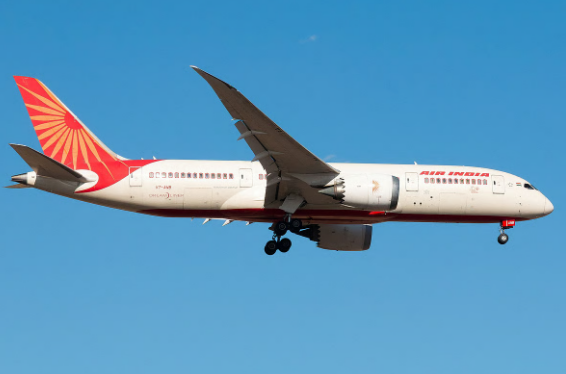
Travel agents across the UAE are reporting a sharp uptick in demand for Seat 11A on flights, following the miraculous survival of a passenger who occupied the same seat during the fatal Air India crash on June 12.
British national Vishwash Kumar Ramesh was the sole survivor among 242 passengers aboard the Ahmedabad-to-London Air India flight. Seated in 11A, near an emergency exit, Ramesh managed to escape with burn injuries. His remarkable survival has triggered a wave of interest among Indian travellers based in the UAE, who now view Seat 11A — and row 11 more broadly — as “lucky” or “safer.”
“People are asking about the 11A seat,” confirmed Avinash Adnani, partner at Neo Travel and Tourism in Dubai. “Many Indian passengers are requesting 11A or seats in row 11. There is a belief that it’s safer in case of a crash, and we’ve seen people willing to pay up to Dh200 extra to secure it.”
The spike in inquiries, Adnani added, has been noticeable over the past few days, with travellers specifically seeking window or aisle seats closest to emergency exits.
Namita Thakkar, a Dubai-based communications professional, is among those who considered selecting the seat for her upcoming trip to Mumbai. “Reading about the survivor made me think about seat 11A — not out of superstition, but perhaps a small hope amid the tragedy,” she told Khaleej Times. “But I also want to avoid instilling fear in my child. So I’ve decided to focus on the fact that flying is generally safe and that miracles — and everyday safety — do happen.”
Travel experts note that emergency exit rows are typically designated as premium due to extra legroom. However, airlines impose restrictions on who can occupy these seats, often excluding children, the elderly, and pregnant women due to safety considerations.
Commenting on the broader question of air safety, Reena Philip, General Manager at Air Travel Enterprises, said that tail-end seats are often thought to offer higher survival rates in the event of a crash. However, aviation experts caution against drawing firm conclusions.
“No two crashes are the same,” said Saj Ahmad, chief analyst at StrategicAero Research in London. “While sitting at the rear may have helped in some cases, others — like the 1985 Japan Airlines crash — saw survivors in the middle of the aircraft. Surviving an air disaster is unpredictable.”
Despite the rarity of such incidents, the story of the Air India survivor has clearly struck a chord with travellers. While some are choosing 11A out of perceived safety, others say it serves as a symbol of hope amid tragedy.