The UAE has emerged as the most optimistic nation for global trade growth, according to HSBC’s 2025 Global Trade Pulse Survey, with 94% of UAE businesses expecting strong cross-border expansion despite growing tariff-related challenges.
The survey, conducted between April 30 and May 12, canvassed over 5,700 companies across 13 international markets. It highlights the UAE’s exceptional trade confidence, even as rising geopolitical tensions and tariff costs dampen sentiment in other regions.
While two-thirds of global firms reported cost increases due to trade and tariff uncertainties, UAE businesses have demonstrated resilience and adaptability. Approximately 65% of UAE respondents acknowledged similar cost pressures, with operational expenses rising by an average of 7%. Yet, 76% expect costs to climb further within six months and remain confident in their ability to grow.
Deyana Cherneva, Head of Global Trade Solutions for the Middle East, North Africa, and Türkiye at HSBC Bank Middle East, said UAE firms are well-positioned to navigate these challenges. “By leveraging data analytics, building robust supply chains, and deepening trade ties with key markets, UAE companies are turning uncertainty into opportunity,” she said.
Indeed, 75% of UAE firms surveyed said trade volatility spurred innovation. Nearly half are investing in data analytics, while others are enhancing risk management and improving supply chain visibility. The country’s strategic connections are also key: 83% of firms list the UAE as their top sales market, followed by India (34%), the UK (32%), the US (32%), and Germany (19%).
Sourcing patterns show a similar trend, with 78% prioritizing the UAE itself, along with India, the US, and European partners. Regionally, 62% of UAE businesses are expanding trade within the Middle East, and nearly half are growing ties with China and Europe — a move aligned with the UAE’s Vision 2030, which targets Dh4 trillion in non-oil trade by 2031.
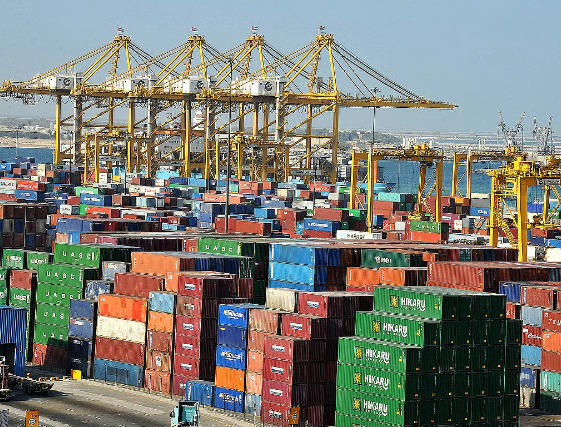
The country’s robust infrastructure is fueling this growth. Non-oil exports reached Dh445 billion in 2024, up 12% from the previous year, according to the Ministry of Economy. Free trade deals, including those with India and the EU, have expanded access, while ports like Jebel Ali — which handled 14.5 million TEUs last year — cement the UAE’s role as a global logistics hub.
As global trade continues to shift, 55% of UAE firms are exploring new markets, particularly in Southeast Asia and Africa. With non-oil sectors contributing 73% to GDP in 2024 and the digital economy projected to grow 15% annually through 2030, analysts say the UAE is positioned to remain a global trade leader despite ongoing volatility.