Pakistan returned a captured Indian border guard to Indian authorities on Monday, signaling a potential thaw in tensions following the recent deadly clashes between the nuclear-armed neighbors.
The guard, identified as Purnam Kumar Shaw, had been in Pakistani custody since April 23, a day after a deadly assault in Indian-administered Kashmir that left 26 people dead. No group has claimed responsibility for the April 22 attack, but New Delhi has accused Islamabad of backing the perpetrators—a charge Pakistan firmly denies, instead calling for an independent international investigation.
India’s Border Security Force (BSF) confirmed Shaw’s repatriation in a statement, saying the handover was “conducted peacefully and in accordance with established protocols.” The move comes days after both sides agreed to a ceasefire that ended four days of intense cross-border fighting involving missiles, drones, and fighter jets.
“I am very happy today,” Shaw’s wife Rajani, who is currently pregnant, told reporters after the announcement. She had previously expressed despair over her husband’s fate, telling The Indian Express that she had “lost all hope” before the ceasefire was announced.
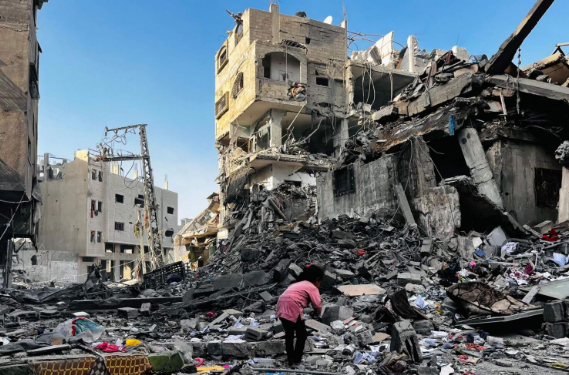
The recent conflict marked the most serious escalation between India and Pakistan since their 1999 Kargil War. According to Islamabad, India’s “unprovoked and reprehensible” attacks during the skirmishes killed 40 Pakistani civilians, half of them women and children, along with 13 military personnel. India, meanwhile, reported 15 civilian and five military deaths on its side.
Despite mutual accusations of aggression, the ceasefire appeared to be holding as of Tuesday, offering a glimmer of hope for de-escalation.
Pakistan’s military claimed it shot down five Indian jets during the hostilities. While India has not officially acknowledged the loss of any aircraft, a security source told AFP that at least three Indian fighter jets had crashed within Indian territory.
Indian Prime Minister Narendra Modi addressed the nation on Monday, vowing a strong response to any future attacks. “If another terrorist attack against India is carried out, a strong response will be given,” he warned. Modi later met with Indian service members involved in the conflict and praised their “unwavering dedication” on social media.
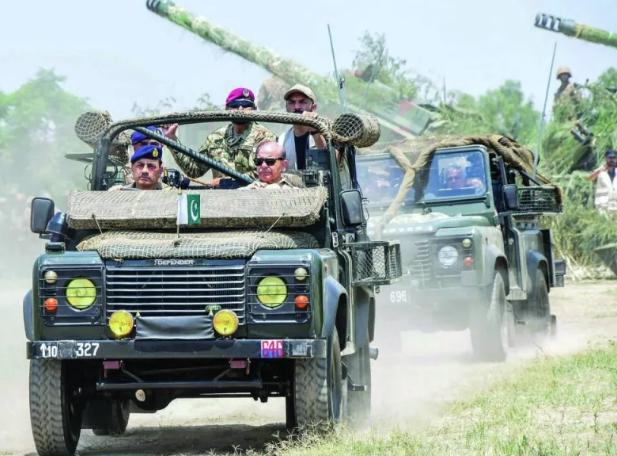
In contrast, Pakistani Prime Minister Shehbaz Sharif accused India of issuing “provocative and inflammatory remarks” that threaten regional stability. During a call with UN Secretary-General Antonio Guterres, Sharif criticized India’s decision to suspend the Indus Waters Treaty, calling it a “red line.”
“Don’t even think of touching the water treaty,” Sharif warned. Pakistan’s foreign ministry echoed the sentiment, accusing Modi of fabricating “misleading narratives” to justify aggression and urged the international community to closely monitor India’s actions.
With both sides trading accusations and tensions simmering just beneath the surface, the region remains on edge despite the current pause in hostilities.