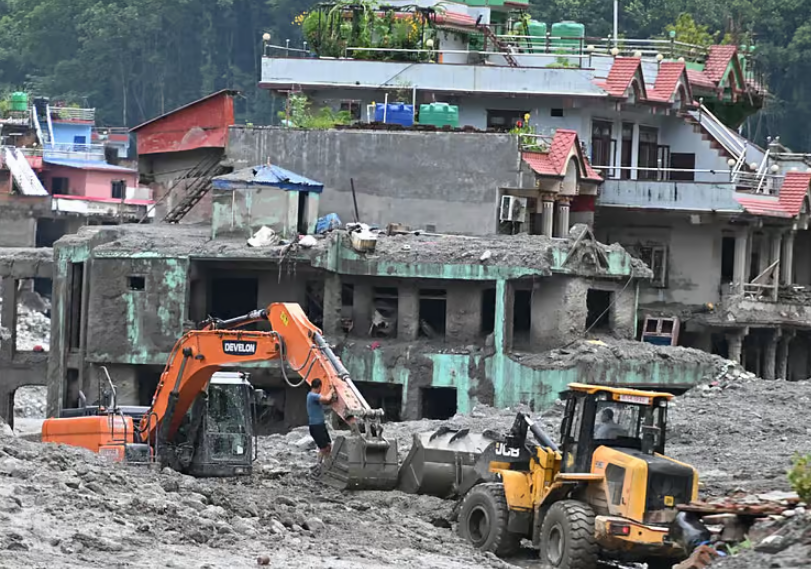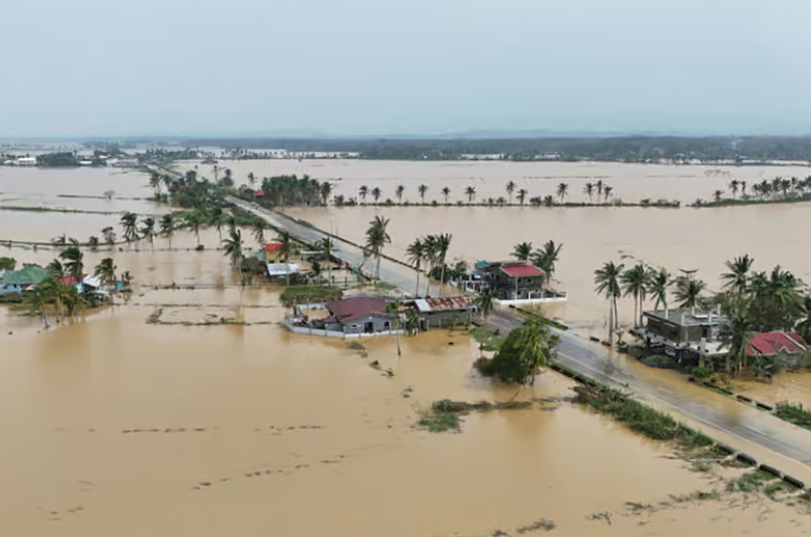
Flooding caused by the southwest monsoon and continuing stormy weather has displaced communities across the Philippines and left vegetable farmers facing heavy crop losses and falling prices.
Among those affected is 64-year-old Elia Jalota, who is staying at a crowded evacuation centre in Bagong Silangan, Quezon City. Her home and water cabbage, or kangkong, patch have been flooded as persistent rains continue across the country.
“We have somehow gotten used to this life already, living in evacuation centers whenever it floods,” Jalota said.
Bagong Silangan lies near the Marikina River, where many residents grow water cabbage, sweet potatoes, taro and other vegetables on land that is frequently affected by flooding. Vegetable plots in the area have become smaller in recent years as authorities have built major flood-control infrastructure along the river.
The projects followed devastating flooding in 2009, when Typhoon Ondoy killed 36 people in the community. Despite billions of pesos being spent on flood protection, residents such as Jalota continue to see their homes and livelihoods affected during severe monsoon and typhoon periods.
The Kilusang Magbubukid ng Pilipinas, or Farmers’ Movement of the Philippines, has called on President Ferdinand Marcos Jr and the Department of Agriculture to provide immediate production subsidies and recovery assistance to farmers.
As of August 17, agricultural damage had exceeded P1 billion, including P589 million in rice and P313 million in vegetables, according to the Department of Agriculture.
Farmers are facing losses on both sides of their businesses. Floods and heavy rain have damaged crops, while poor weather has disrupted transport and reduced demand, leaving many growers unable to sell what they manage to harvest.
At the La Trinidad Trading Post in Benguet, long lines of trucks have reportedly been unable to move produce because of difficult weather conditions. Vegetable prices have also fallen sharply, with cabbage selling for as little as P8 per kilogram, carrots for P30, broccoli for P80, potatoes for P75 and Chinese cabbage for P20.
“Vegetable farmers are losing both their crops and their income,” said KMP chairperson Danilo Ramos.
Deliveries to the La Trinidad trading post fell by about 1,800 metric tons between August 1 and 10, reflecting the disruption to production and transport.
Benguet and Mountain Province have recorded some of the heaviest losses. Around P300,000 worth of crops were damaged in Buguias, while 60 hectares were affected in Mankayan, with losses estimated at P3 million.
Farmers in Tublay dumped Chinese cabbage and carrots along a road after failing to find buyers at viable prices.
Other affected areas include Ilocos Norte, Ilocos Sur, La Union, Mindoro and Quezon, where rice, vegetables and sugarcane have suffered damage.
The KMP said farmers should not be left to recover alone. The Philippines has around 11 million farmers, farm workers and fisherfolk, but fewer than 6,000 farmers are insured. The Philippine Crop Insurance Corp. is preparing an initial P36 million in insurance payouts.
With forecasters expecting frequent rain through the end of the week, farmers and local communities remain at risk of further losses.