A severe heatwave continued to affect large parts of Europe on Thursday, prompting Italy to place all of its major cities under the highest level of health alert while several countries introduced energy-saving measures as temperatures climbed above 40 degrees Celsius.
Italy issued red heat alerts from Palermo in Sicily to Bolzano in the north, warning that prolonged high temperatures could pose serious health risks to the entire population. The country is accustomed to hot summers, but the nationwide scale of the warning was unprecedented.
Temperatures reached 42.8C in Bagnacavallo near Ravenna in the Emilia-Romagna region, among the hottest areas of the country. In Rome, tourists used umbrellas and city fountains to escape the intense heat, while authorities urged people to avoid outdoor activity during the hottest parts of the day.
In Assisi, pilgrims attending events during Pope Leo’s visit were sprayed with water as they gathered in the summer heat to mark the 800th anniversary of the death of St Francis.
The extreme weather has also increased pressure on energy and water systems elsewhere in Europe.
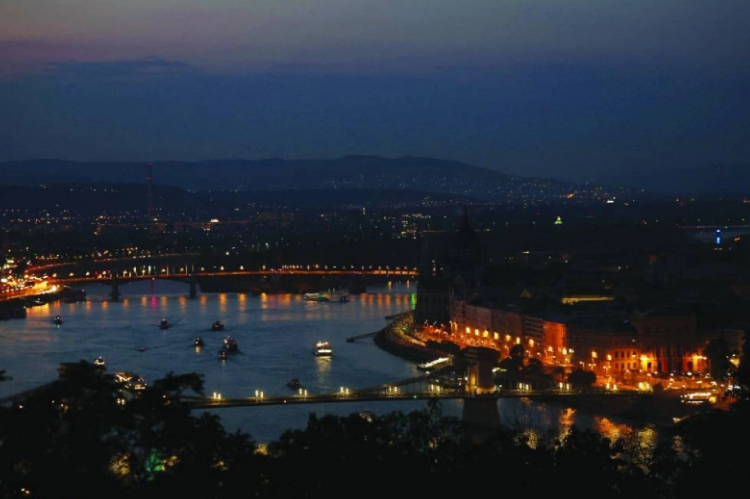
Hungary switched off decorative and other non-essential lighting at state institutions at night, including parts of the parliament complex, Buda Castle and the Chain Bridge. The measures were introduced as unusually low water levels on the Danube affected the country’s energy infrastructure.
Hungary’s sole nuclear power plant, which relies on river water for cooling, has been largely shut down, putting additional pressure on electricity supplies. In neighbouring Romania, authorities prepared four rock-filled barges to divert water towards the country’s only operating reactor and extend its operating period.
Bucharest reduced the intensity of street lighting by about one-third and switched off lighting at landmarks and museums overnight.
Low water levels are also disrupting transport on Germany’s Rhine, where vessels have been forced to carry smaller loads. The restrictions are increasing freight costs on one of Europe’s key waterways for transporting commodities including grain, minerals, coal and oil products.
Wildfires remain another major concern. Bulgaria became the latest European Union country to suffer significant fires, with the Trakia highway closed after strong winds carried flames across the road southeast of Sofia.
The European Union is expected to encourage member states to increase spending on wildfire prevention. Experts estimate that the economic damage from this summer’s fires has already exceeded €15 billion.
In Bosnia and Herzegovina, tourists have sought relief inside the Vjetrenica cave, where temperatures remain around 11C throughout the year. The UNESCO-listed site has become a natural refuge as temperatures outside approach 40C.
Europe is warming faster than any other continent, and the latest heatwave has highlighted the growing pressure extreme temperatures are placing on public health, infrastructure, energy supplies and transport.