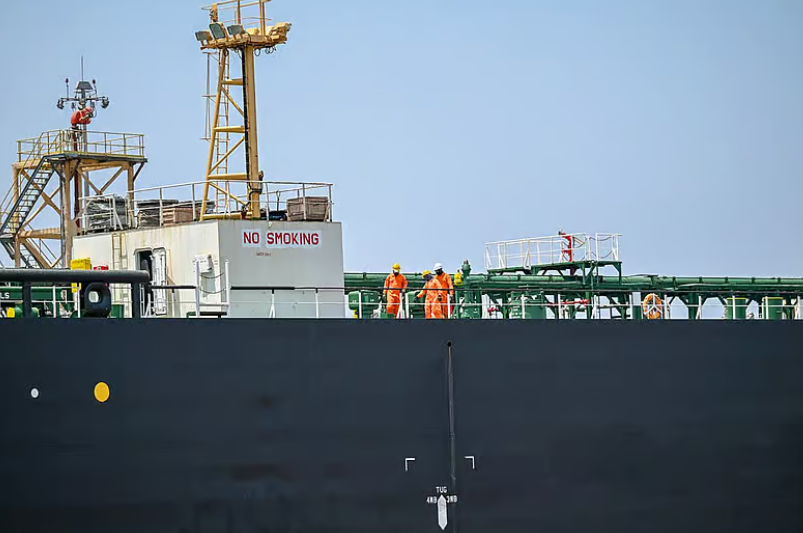
India has instructed shipowners, vessel managers and recruitment agencies not to deploy Indian seafarers on ships transiting the Strait of Hormuz until further notice, as escalating tensions in the region continue to threaten commercial shipping.
The Directorate-General of Maritime Administration (DGMA) issued the advisory in response to growing security concerns following a series of attacks on merchant vessels operating in and around the strategically important waterway.
In a statement posted on X, the DGMA said it is closely monitoring the evolving situation and remains committed to protecting the safety, security and welfare of Indian seafarers.
Under the directive, maritime stakeholders have been told to suspend the deployment of Indian crew members on vessels passing through the Strait of Hormuz until new instructions are issued. The administration also called for continuous monitoring of navigational warnings and security advisories and ordered strict compliance with the International Ship and Port Facility Security (ISPS) Code.
The advisory urged masters of vessels operating in the Arabian Gulf, the Strait of Hormuz and nearby waters to maintain heightened security, closely follow updates from relevant authorities and fully implement approved ship security plans and procedures.
According to the DGMA, recent attacks involving merchant vessels, including Mombasa B, Al Bahyah, GFS Galaxy, MT Wedyan and Al Rekayyat, have significantly increased the risks faced by commercial ships and their crews in the conflict-affected region.
India has one of the world’s largest seafaring workforces, with more than 300,000 Indian sailors employed on international shipping fleets. The government said the conflict linked to the US-Israel-Iran war has already claimed the lives of at least 16 Indian seafarers in Gulf waters. More than 180 Indian crew members have also been rescued after their vessels came under attack.
To strengthen oversight, the government has introduced a real-time monitoring system that tracks Indian seafarers on a vessel-by-vessel basis. A comprehensive dashboard will monitor Indian nationals serving aboard ships operating in the Arabian Gulf, the Strait of Hormuz and the Gulf of Oman, regardless of the vessel’s flag.
Authorities have also directed the appointment of liaison officers to assist every affected Indian seafarer, providing a dedicated point of contact during emergencies.
Apart from security threats, Indian sailors continue to face challenges linked to crew abandonment. Some shipowners leave crews stranded at foreign ports without wages or financial assistance to return home, creating additional hardship for affected workers.
Data from the International Transport Workers’ Federation showed that 1,125 Indian seafarers were abandoned during 2025, accounting for 18% of more than 6,000 reported abandonment cases worldwide.
Indian nationals currently make up around 12% of the global seafaring workforce. The government has set a target of increasing that share to 20% over the next four years, while strengthening measures to improve the safety and welfare of its maritime workforce operating in high-risk regions.