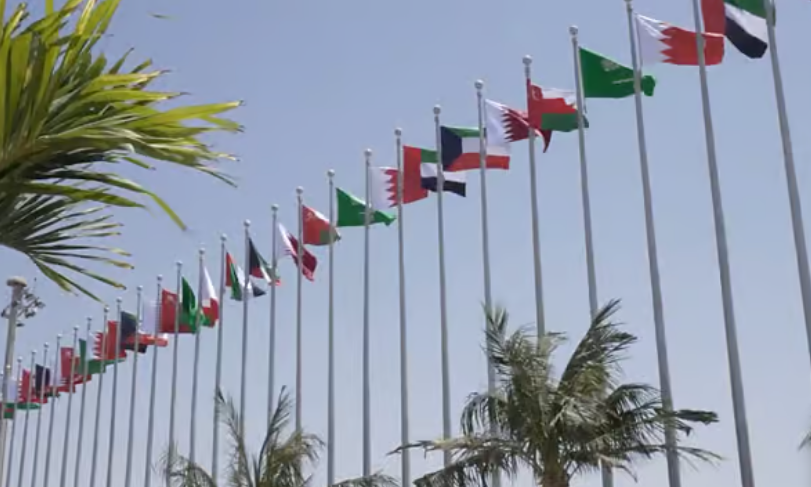
Leaders of the Gulf Cooperation Council gathered in Jeddah on April 28 for a summit dominated by rising regional tensions, with member states pledging closer military coordination and faster progress on joint economic and infrastructure projects.
The meeting, held in Jeddah, brought together heads of state and senior ministers from across the six-member bloc as concerns mounted over regional security and recent attacks attributed to Iran.
In a joint statement, GCC leaders strongly condemned what they described as Iranian attacks targeting member states and Jordan. They said the strikes hit civilian infrastructure and critical facilities, causing casualties and damage to property. The council called the attacks a violation of sovereignty, international law and the principles of good neighbourly relations.
The leaders said the incidents had further strained already fragile relations with Iran and urged Tehran to take concrete steps to rebuild trust through meaningful diplomatic engagement and de-escalation.
Reaffirming the bloc’s collective security doctrine, the GCC stated that the security of one member is inseparable from that of all. Under the Joint Defence Agreement, any attack on one member state is regarded as an attack on the entire council.
Leaders also underscored their right to self-defence under Article 51 of the UN Charter, including collective action where necessary to safeguard sovereignty and territorial integrity. They praised the readiness of Gulf armed forces, particularly their response to recent missile and drone threats, noting the successful interception of attacks aimed at critical infrastructure.
Maritime security featured prominently in discussions, especially regarding the Strait of Hormuz, a vital artery for global oil shipments. GCC leaders rejected any attempts to restrict navigation or impose fees on vessels using the waterway, calling for the full restoration of safe and unrestricted passage.
They warned that disruptions in the strait would pose serious risks not only to regional stability but also to international energy markets and global trade.
The summit also highlighted the need to accelerate military integration. Leaders called for faster development of shared defence systems, including a regional early warning network for ballistic missile threats to improve preparedness and collective response capabilities.
Beyond security, the GCC reaffirmed its commitment to deeper economic and infrastructure cooperation. Secretary-General Jasem Mohamed Albudaiwi was tasked with speeding up implementation of major regional projects.
These include the long-planned GCC railway network, expanded electricity interconnection systems, cross-border oil and gas pipelines, and water-sharing infrastructure. Plans for strategic reserve zones and enhanced logistics networks were also advanced.
The initiatives are intended to strengthen regional resilience, improve connectivity and deepen integration as Gulf states adapt to an increasingly uncertain geopolitical and economic environment.