Japan has called for a swift agreement between the United States and Iran to ease tensions in the Middle East, following the collapse of recent peace talks that failed to produce a breakthrough.
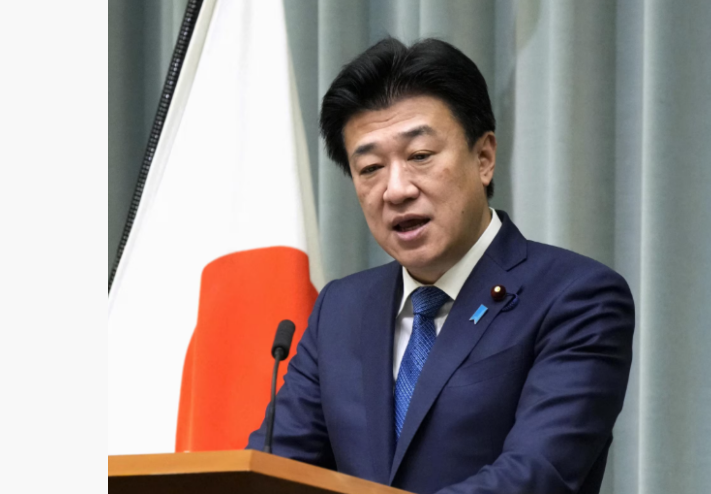
Speaking at a press conference on Monday, Chief Cabinet Secretary Minoru Kihara said Tokyo hoped a “final agreement” could be reached soon to stabilise the situation. He stressed that the priority remains de-escalation and ensuring safe navigation through the Strait of Hormuz, a vital corridor for global energy supplies.
The talks between Washington and Tehran, held over the weekend, ended without a deal, raising fresh concerns about the future of a fragile ceasefire and the risk of further disruption in the region. Japan, which depends heavily on energy imports from the Middle East, is closely monitoring the developments.
Kihara said the government would continue to coordinate with the international community to reduce tensions and protect shipping routes. He noted that no decision has yet been taken on whether Japan will deploy its Self-Defense Forces for potential minesweeping operations in the strait.
The waterway remains a critical concern for Tokyo. More than 90 per cent of Japan’s crude oil imports come from the Middle East, with the majority passing through the Strait of Hormuz. Any prolonged disruption could have serious implications for the country’s energy security and economic stability.
Tensions in the region have escalated since late February, when the United States and Israel launched military actions against Iran. In response, Iran has effectively restricted access to the strait, heightening fears of supply shortages and rising global energy prices.
Shipping activity in the area has already shown signs of strain, with some vessels rerouting to avoid potential risks. Analysts warn that even limited interruptions to traffic through the strait can have an outsized impact on global oil markets, given the volume of crude that passes through the narrow channel each day.
Japan has previously played a diplomatic role in efforts to reduce tensions in the Middle East and has maintained relatively balanced relations with both the United States and Iran. Officials in Tokyo are now urging all parties to return to negotiations and avoid further escalation that could threaten regional stability.
As uncertainty continues, Japan’s government is weighing its options, balancing the need to secure energy supplies with concerns about becoming directly involved in a volatile conflict zone.