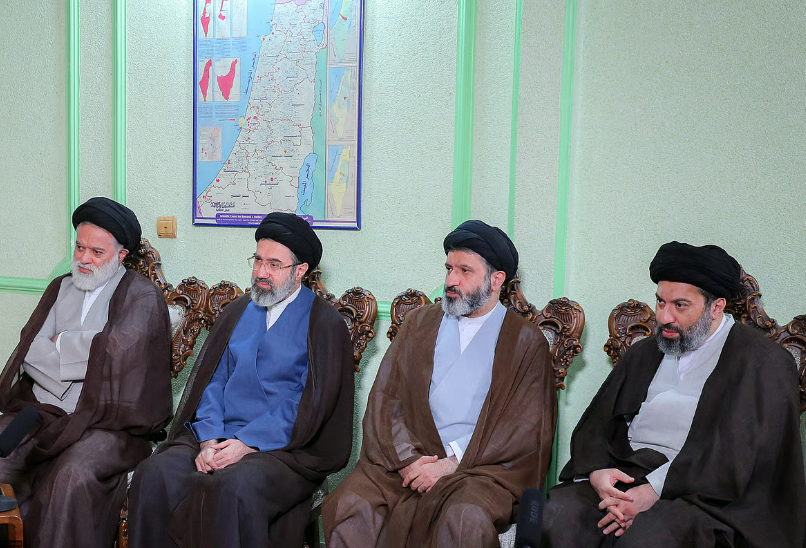
Iranian clerics responsible for selecting a successor to Supreme Leader Ayatollah Ali Khamenei say they are nearing a decision following his killing in US-Israeli strikes a week ago, according to officials familiar with the process.
The development comes at a moment of deep uncertainty for Iran’s political system. “Iranian clerics involved in choosing a successor to Ayatollah Ali Khamenei after his killing a week ago in US-Israeli strikes say they are close to naming the Islamic Republic’s new supreme leader.” Officials suggest an announcement could come as soon as Sunday.
The leadership transition is unfolding while hostilities between Iran, Israel and the United States continue. Washington and Tel Aviv have warned they will maintain pressure on Tehran and have threatened to target any successor to Khamenei as well as those involved in choosing him.
Iran’s system of government is rooted in the 1979 revolution that overthrew the Shah and brought cleric Ayatollah Ruhollah Khomeini to power. Khomeini introduced the concept of vilayat-e faqih, or guardianship of the Islamic jurist, which places ultimate authority in the hands of a senior religious figure. Under the constitution, the supreme leader guides the elected president and parliament but holds final authority over major decisions.
Khomeini served as the first supreme leader until his death in 1989, when Khamenei assumed the role. During his decades in power, Khamenei maintained decisive influence over Iran’s military, judiciary and key political institutions. His successor will inherit that authority at a time when the state is facing military pressure and internal strain.
The constitution requires that a new supreme leader be selected within three months. In the meantime, a temporary leadership council made up of President Masoud Pezeshkian, Guardian Council member Ayatollah Alireza Arafi and judiciary chief Ayatollah Gholamhossein Mohseni-Ejei is overseeing state affairs.
The task of formally choosing the new leader belongs to the Assembly of Experts, a body of around 90 clerics elected every eight years. Many of its members are elderly, and consultations have reportedly been conducted online due to ongoing strikes.
Although the assembly holds the official authority, analysts believe influential political figures and the Islamic Revolutionary Guards Corps are playing an important role behind the scenes. Veteran adviser Ali Larijani is often described as a central power broker who could help shape the outcome.
Several figures are considered potential successors. Mojtaba Khamenei, the late leader’s son, is widely seen as a leading candidate and has support within parts of the Revolutionary Guards. Hassan Khomeini, the grandson of the Islamic Republic’s founder, is another possibility and is linked to reformist political circles.
Other names include Arafi and Mohseni-Ejei, both senior clerics associated with the current leadership. Hardline figures such as Ahmad Alamolhoda and Mohsen Araki have also been mentioned.
The Revolutionary Guards may influence the final decision, though recent strikes have weakened parts of its leadership. Over the past several years, senior commanders have been killed, including Quds Force chief Qassem Soleimani in 2020 and more recently commander Mohammed Pakpour.
While Iranians elect a president and parliament, the choice of supreme leader is made within the clerical establishment. Candidates for the Assembly of Experts must be approved by the Guardian Council, meaning the final decision rests with figures already embedded within the ruling system.