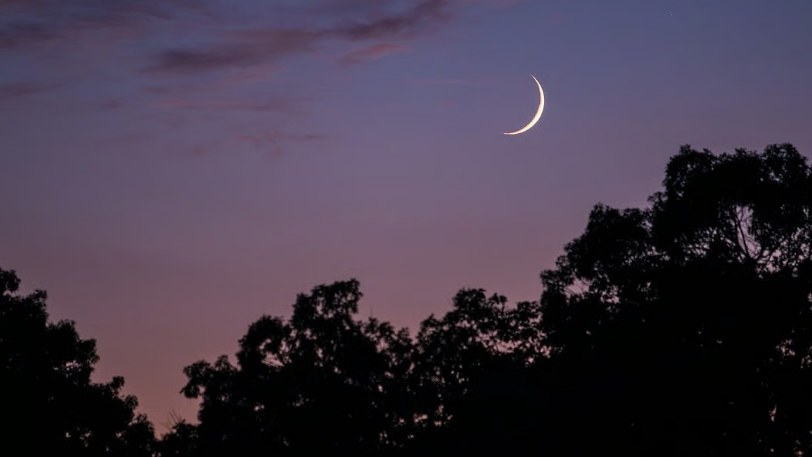
Saudi Arabia has urged Muslims across the Kingdom to sight the Ramadan crescent on the evening of Tuesday, February 17, corresponding to the 29th of Shaban according to the Umm al-Qura calendar. The Supreme Court issued a statement asking anyone who spots the moon, whether with the naked eye or binoculars, to report their observation to the nearest court or contact a regional centre for assistance.
The court highlighted that those capable of sighting the crescent should pay attention to this matter and participate in committees formed in the country’s regions. The statement emphasised the religious significance of the act, noting that it carries spiritual rewards and benefits the wider faithful community.
Meanwhile, residents in the UAE are being cautioned about the potential dangers of attempting to sight the crescent themselves. Officials at the International Astronomy Centre warned that the proximity of the moon to the sun on that day, coinciding with a solar eclipse, could pose serious risks to eyesight. Experts noted that looking directly at the sun through telescopes, binoculars, or other optical instruments without certified solar filters may result in temporary or permanent eye damage, including blindness.
Professional observatories, they added, conduct observations using internationally recognised safety protocols and specialised equipment, including certified solar filters, to prevent harm during such conditions. Experts from Sharjah’s astronomy team at the Sharjah Academy for Astronomy, Space Sciences and Technology confirmed that sighting the crescent would be impossible with even advanced telescopes, not only in the UAE but across much of the Islamic world.
Authorities in the region have urged the public to rely on verified reports from recognised astronomical centres and religious authorities to avoid confusion in fasting schedules and community activities.
Oman, in contrast, became the first Gulf country to announce the start of Ramadan based on scientific calculations. The Sultanate’s committee stated that the moon will set on Tuesday before or at sunset in all governorates, making the crescent’s sighting astronomically impossible. Following established principles that prioritise observable reality and scientific certainty, the committee declared Thursday, February 19, as the first day of Ramadan.
The differing approaches highlight the balance between traditional moon sighting practices and modern astronomical calculations in determining the holy month’s start across the region. While Saudi Arabia continues to follow the traditional crescent sighting method, Oman has embraced scientific certainty to set the calendar in advance, offering clarity for residents and ensuring uniform observance of Ramadan practices.