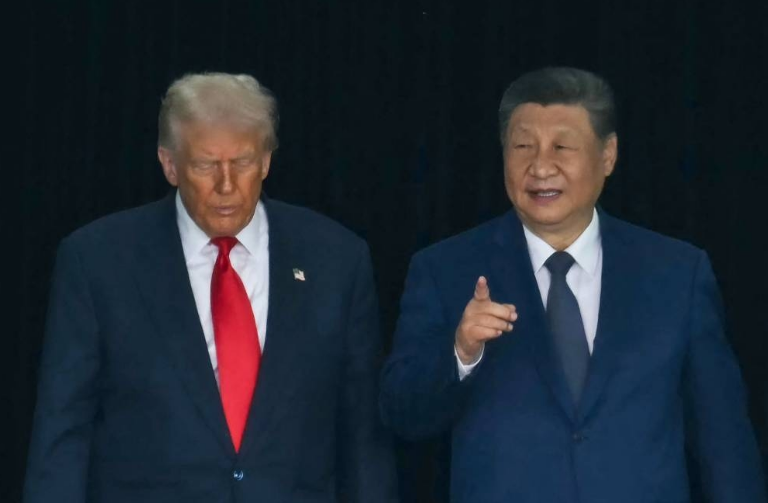
Chinese President Xi Jinping said Beijing and Washington have reached a “consensus” on economic and trade matters following a high-stakes meeting with former U.S. President Donald Trump in Busan, South Korea, marking their first face-to-face encounter in six years.
The meeting, closely watched by global markets, comes amid a prolonged and bitter trade war between the world’s two largest economies — one that has disrupted supply chains, rattled investors, and driven up costs for businesses and consumers worldwide.
According to China’s state-run news agency Xinhua, Xi told Trump that the two nations “should have positive interactions on the regional and international stage” and continue constructive dialogue to stabilize economic relations. The Chinese leader said that working-level teams from both sides had held “in-depth exchanges” on major trade issues and had “reached a consensus on resolving them,” though no specific details were disclosed.
“Both teams should refine and finalise follow-up work as soon as possible, maintain and implement the consensus, and provide tangible results to set minds at ease about the economies of China, the United States, and the world,” Xi was quoted as saying.
While the statement hinted at progress, it offered few clues about whether the two countries had agreed on tariff reductions, export restrictions, or measures to ease tensions over critical supply chains — issues that have dominated U.S.-China relations since 2018.
The Trump administration had imposed sweeping tariffs on hundreds of billions of dollars’ worth of Chinese goods, citing unfair trade practices and intellectual property theft. China responded with retaliatory duties on American exports, including agricultural products such as soybeans, corn, and pork, hitting U.S. farmers particularly hard.
Trade analysts say any breakthrough between the two sides could help restore confidence in global markets that have been strained by years of economic friction and geopolitical uncertainty. “Even a modest agreement would be a welcome sign of stability,” said one Beijing-based economist. “Both sides have strong incentives to ease the pressure — China’s growth has slowed, and the U.S. economy remains sensitive to trade disruptions.”
The meeting in Busan was viewed as a test of whether the two rivals could reset relations after years of escalating tensions not only over trade but also technology, security, and regional influence in Asia.
Neither Washington nor Beijing released an official joint statement after the meeting, leaving investors and diplomats waiting for further clarification on what the “consensus” entails and how it might shape future economic cooperation.