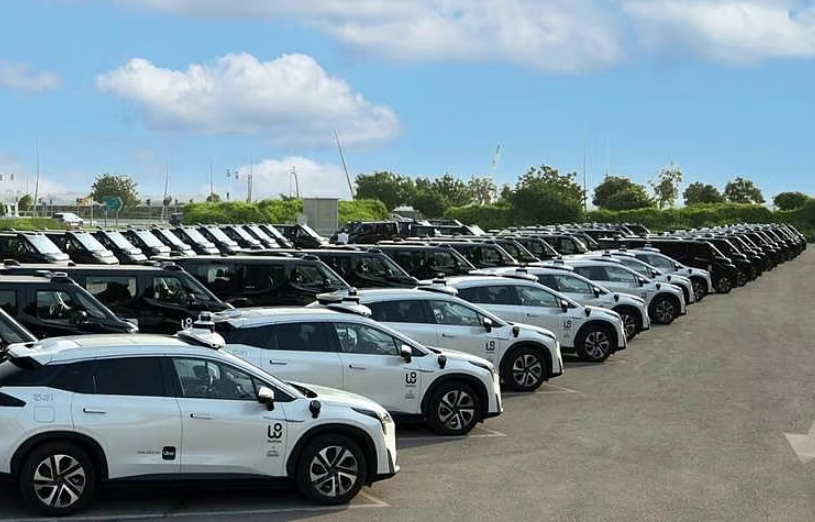
Guangzhou-based autonomous driving technology company WeRide announced on Friday that around 1,200 Robotaxis will be deployed in the Middle East, covering Abu Dhabi, Dubai, and Riyadh. The rollout is expected to be completed as soon as 2027, marking one of the largest commercial commitments for self-driving taxis in the MENA region.
The autonomous cabs will be accessible through the Uber app in all three cities, building on existing fully driverless operations in Abu Dhabi and passenger services in Dubai and Riyadh, WeRide said in a statement shared with Khaleej Times. Currently, the company operates more than 200 Robotaxis in the region. The fleet will be expanded gradually, with Uber adding more vehicles as regulatory approvals are obtained and performance targets are met, including the launch of fully driverless commercial operations covering key urban areas.
In December 2025, Dubai’s Roads and Transport Authority (RTA) announced that WeRide’s Robotaxis had become available via the Uber app. The service currently operates in Umm Suqeim and Jumeirah, two prominent areas in the emirate, known for their public beaches and high tourist activity. During this pilot stage, a specialist driver remains on board to ensure safety and reliability.
“The service is currently operating with a specialist driver on board to ensure a safe and reliable experience, paving the way for a fully driverless service in early 2026,” said Ahmed Bahrozyan, CEO of RTA’s Public Transport Agency. He noted that the pilot supports Dubai’s Self-Driving Transport Strategy, which aims to convert 25 percent of all journeys across the emirate to autonomous modes by 2030.
WeRide’s plan reflects the growing momentum for autonomous mobility in the Middle East. Analysts say self-driving taxis have the potential to reduce traffic congestion, improve road safety, and provide a flexible, on-demand transport option in major cities. Abu Dhabi and Dubai have already become key testing grounds for autonomous vehicle technology, while Riyadh is emerging as a strategic hub in Saudi Arabia’s push for smart city initiatives.
By integrating Robotaxis into Uber’s platform, passengers will be able to request rides through a familiar interface, while the vehicles operate under fully autonomous technology once regulatory approvals and technical milestones are achieved. The company emphasized that safety remains a top priority during the phased expansion.
The deployment is expected to accelerate the adoption of autonomous transportation across the region, providing an alternative to traditional ride-hailing services and contributing to broader goals of smart city development. With WeRide’s expansion, the Middle East could become one of the leading regions globally in commercial Robotaxi operations over the next few years.