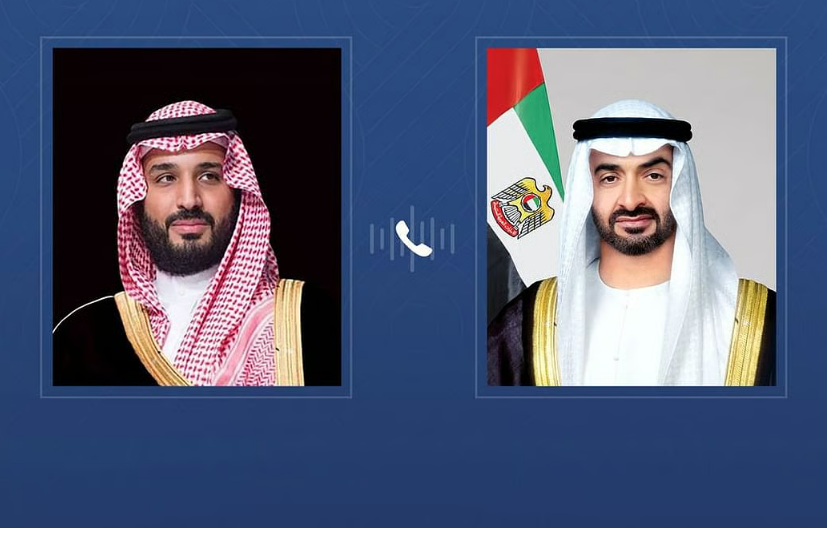
UAE President Mohammed bin Zayed Al Nahyan received a phone call on Saturday from Mohammed bin Salman, Crown Prince and Prime Minister of Saudi Arabia, as regional tensions intensified following missile attacks attributed to Iran.
According to official statements, the two leaders discussed recent developments in the region, including what the UAE described as blatant Iranian attacks targeting its territory and several other countries. The conversation comes amid heightened security concerns across the Gulf after a series of strikes and counter-strikes raised fears of a broader confrontation.
During the call, the Saudi Crown Prince expressed the Kingdom’s condemnation of the attacks and affirmed its full solidarity with the United Arab Emirates. He conveyed Saudi Arabia’s readiness to place all its capabilities at the UAE’s disposal in support of any measures taken to safeguard its security and sovereignty.
Sheikh Mohammed bin Zayed expressed appreciation for what he described as Saudi Arabia’s fraternal solidarity and support. The leaders underscored the depth of ties between the two nations and their shared commitment to regional stability.
Both sides warned of the serious consequences of continued violations of state sovereignty and breaches of international law. They said such actions represent a dangerous escalation that threatens regional security and undermines stability at a time of heightened geopolitical tension.
The exchange reflects close coordination between the Gulf neighbours as they respond to developments that have unsettled the region. In recent days, governments across the Middle East have issued statements condemning missile attacks and calling for restraint to prevent further deterioration of the security situation.
The UAE and Saudi Arabia have long maintained close political and security cooperation, particularly in addressing regional crises. Saturday’s call highlighted that alignment, with both leaders emphasising the need to avoid further escalation.
They also stressed the importance of diplomatic engagement as the preferred path forward. Both called for restraint and urged all parties to pursue political and diplomatic solutions to preserve the security and stability of the region.
As tensions remain high, regional leaders continue to engage in consultations aimed at preventing further conflict and protecting vital economic and security interests across the Gulf.