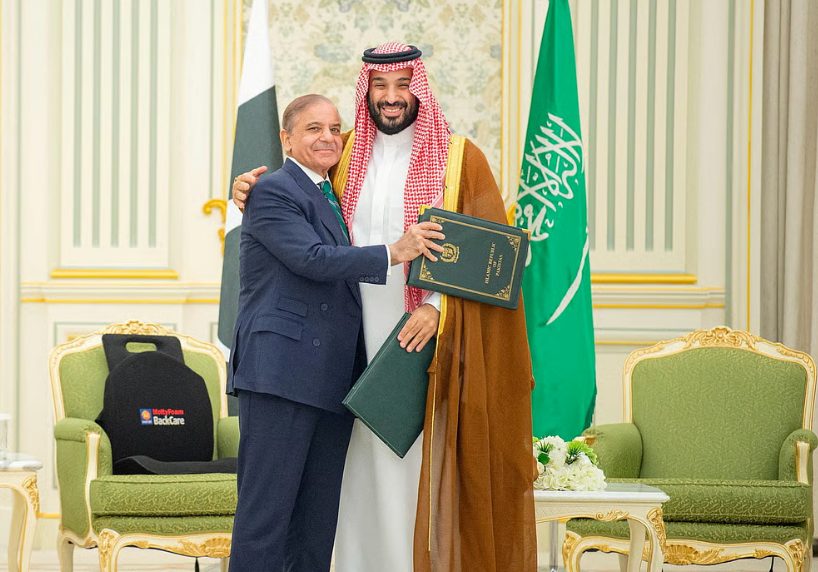
Turkey will not join a mutual defence agreement between Saudi Arabia and Pakistan, a source close to the Saudi military told AFP on Saturday. The clarification comes after a Turkish official earlier this month said that Ankara and Riyadh were in talks about joining the pact, sparking speculation about the formation of a broader regional alliance.
The Saudi military source dismissed reports of negotiations, emphasizing that the agreement is strictly bilateral. “Turkey won’t join the defence pact with Pakistan. It’s a bilateral pact with Pakistan and will remain a bilateral pact,” the source said. A Gulf official corroborated the statement, noting that while Saudi Arabia maintains separate agreements with Turkey, the pact with Pakistan is exclusively bilateral.
The Saudi-Pakistan defence agreement, announced last year, drew significant attention for its potential strategic implications. Observers have speculated about the pact’s possible nuclear dimension, given Pakistan’s possession of nuclear weapons. The pact was signed only months after Pakistan and India engaged in a four-day conflict in May, resulting in more than 70 deaths on both sides through missile, drone, and artillery exchanges. This confrontation marked the most severe clashes between the two nuclear-armed neighbours since 1999.
Pakistan and India have a long history of accusing each other of supporting militant groups to destabilize the other. Saudi Arabia is widely believed to have helped mediate and defuse the May conflict. The kingdom also maintains strong ties with India, whose rapidly expanding economy relies heavily on petroleum imports. Saudi Arabia is India’s third-largest oil supplier, according to the Indian foreign ministry.
The pact between Pakistan and Saudi Arabia reflects Riyadh’s ongoing interest in strengthening security cooperation in South Asia amid growing regional tensions. Analysts have suggested that Saudi Arabia views the bilateral agreement as a way to ensure stability along strategic corridors and safeguard its interests in the broader Middle East and South Asia.
While Turkey has signed separate security and defence agreements with Saudi Arabia, it will not be part of the Pakistan-Saudi pact. The decision may temper speculation about the creation of a larger alliance that could have shifted the balance of power in the region. Analysts noted that the move underscores the selective and strategic nature of Riyadh’s military partnerships.
The development comes amid a tense regional backdrop, including Israeli air strikes in Doha targeting Hamas officials over the summer, followed by Iran’s bombing of a US air base in Qatar. The combination of these events has heightened fears of escalating instability across the Middle East and South Asia.