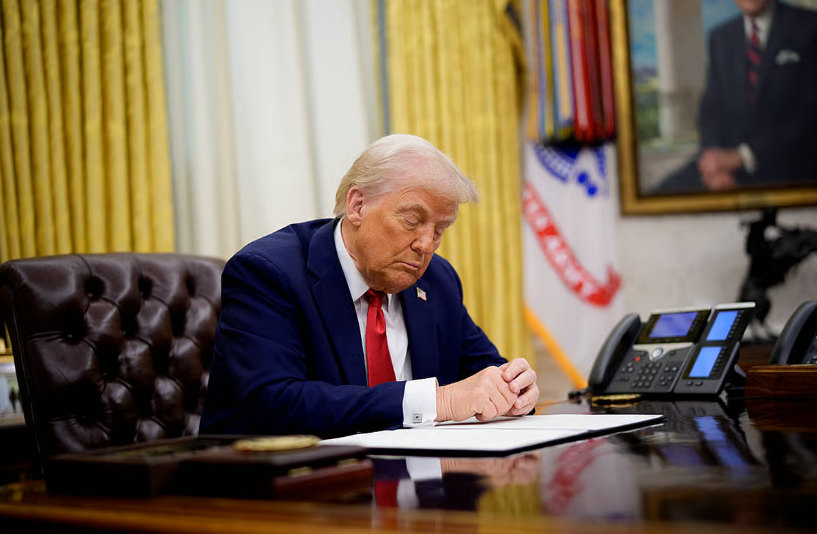
U.S. President Donald Trump has filed a $10 billion defamation lawsuit against media tycoon Rupert Murdoch, The Wall Street Journal, and several associated parties, accusing them of publishing a “false and malicious” story linking him to disgraced financier and accused sex trafficker Jeffrey Epstein.
The suit, lodged in federal court in Miami on Friday, comes in response to a Journal article published a day earlier that alleged Trump sent Epstein a provocative birthday message in 2003. The letter reportedly featured a suggestive sketch of a naked woman and referenced a shared “secret.”
“This is fake news at its worst,” Trump wrote in a post on his social platform, Truth Social. “We have just filed a POWERHOUSE lawsuit against everyone involved in publishing the defamatory article in the useless rag that is The Wall Street Journal.”
The lawsuit names Murdoch, Dow Jones (the Journal’s publisher), two Journal reporters, and parent company News Corp as defendants. Trump’s legal team argues that the article is fabricated, asserting that no such letter exists and that the publication intended to inflict maximum reputational damage.
“The article’s timing underscores the defendants’ malicious intent,” the lawsuit claims. “The resulting harm to President Trump—both financially and reputationally—continues to grow.”
Dow Jones defended its reporting in a statement Friday, saying, “We have full confidence in the rigor and accuracy of our reporting and will vigorously defend against any lawsuit.”
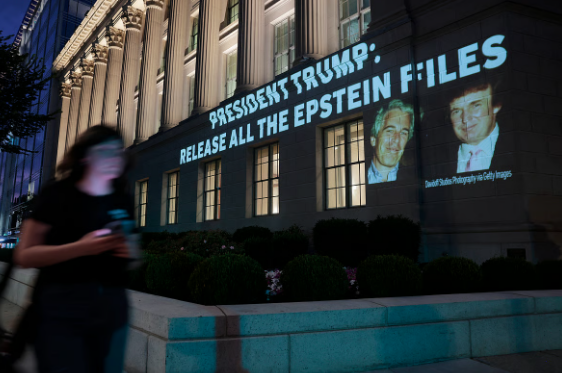
The legal action comes as Trump confronts growing pressure from within his own political base over lingering questions about Epstein’s ties to high-profile individuals. Seeking to address these concerns, Attorney General Pam Bondi filed a request in New York to unseal grand jury testimony from the Epstein case, citing “extensive public interest.”
Epstein, who died by suicide in jail in 2019 while awaiting trial for trafficking underage girls, was known to have social ties to Trump and other prominent figures. His death has fueled conspiracy theories among Trump’s “Make America Great Again” supporters, many of whom demand greater transparency and suspect a broader cover-up.
Earlier this month, Bondi released a memo stating that there is no evidence of an alleged Epstein “client list,” further frustrating segments of Trump’s base who have long sought public disclosures.
The Journal article intensified that scrutiny by implying a personal closeness between Trump and Epstein. According to the piece, the birthday note from Trump featured a hand-drawn figure of a naked woman, with Trump’s signature stylized to mimic pubic hair. It allegedly concluded with the line: “Happy Birthday, and may every day be another wonderful secret.”
Trump denied ever writing such a message. “It’s not my language. It’s not my words,” he said. “I never wrote a picture in my life. I don’t draw pictures of women.”
However, past media reports have documented Trump creating simple sketches for charitable causes in the early 2000s.
Whether the court will authorize the unsealing of the grand jury records remains uncertain. But for now, Trump’s lawsuit signals a forceful attempt to control the narrative surrounding his long-criticized association with Epstein—and to deflect attention from a scandal with potentially serious political consequences.