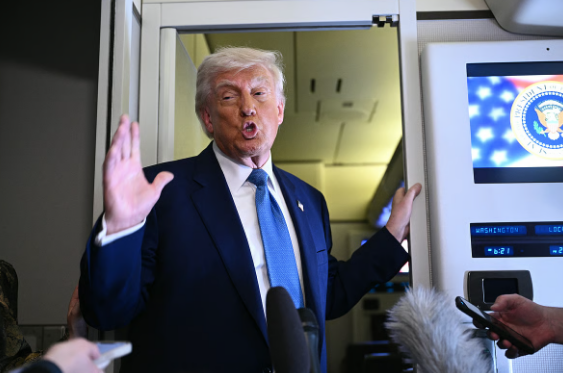
U.S. President Donald Trump announced on Tuesday that a ceasefire agreement between Israel and Iran had come into effect, bringing a temporary halt to a volatile 12-day conflict that had threatened to spiral into a wider regional war.
The announcement came just hours after Iran launched a final wave of missile strikes, killing four people in the southern Israeli city of Beersheba, according to Israel’s national ambulance service. Explosions were also reported near Tel Aviv and other areas in central Israel shortly before the ceasefire was confirmed.
In a post on his Truth Social platform, Trump praised both countries for agreeing to end what he dubbed the “12 Day War,” saying: “On the assumption that everything works as it should, which it will, I would like to congratulate both Countries, Israel and Iran, on having the Stamina, Courage, and Intelligence to end it.”
The ceasefire, according to U.S. and Israeli officials, hinges on a conditional agreement: Israel will not carry out further strikes unless provoked, and Iran has reportedly signalled it will not launch new attacks unless it is attacked first.
A senior White House official said Trump personally brokered the deal in a phone call with Israeli Prime Minister Benjamin Netanyahu. Israel agreed to the ceasefire provided Iran halted its missile barrage. The official described the president’s role as “restrained but determined,” emphasising his focus on protecting U.S. strategic interests while avoiding further escalation.
Iran’s semi-official SNN news agency reported that the final missile launches occurred just before the ceasefire deadline, while Iranian Foreign Minister Abbas Araqchi insisted that Tehran’s restraint was conditional on Israel ceasing what he described as “illegal aggression” against the Iranian people.
Araqchi added that a “final decision” on continuing hostilities would depend on Israeli actions going forward. His comments were echoed by Iran’s Supreme Leader Ayatollah Ali Khamenei, who reiterated that while Iran denies pursuing nuclear weapons, “if we wanted to, no one could stop us.”
Tensions reached a peak over the weekend when the U.S. joined Israel in coordinated strikes on Iranian nuclear sites, claiming Iran was moving closer to acquiring nuclear weapons—a claim Tehran has consistently denied.
Qatar played a quiet but pivotal diplomatic role in securing the truce, with Prime Minister Sheikh Mohammed bin Abdulrahman Al Thani reportedly helping mediate with Iranian officials.
While the ceasefire may ease fears of a broader regional conflict, the situation remains fragile. Trump’s administration is likely to frame the pause in hostilities as a diplomatic win. Still, questions remain about the long-term stability of the truce and the potential for renewed violence if either side perceives the other to have violated the terms.