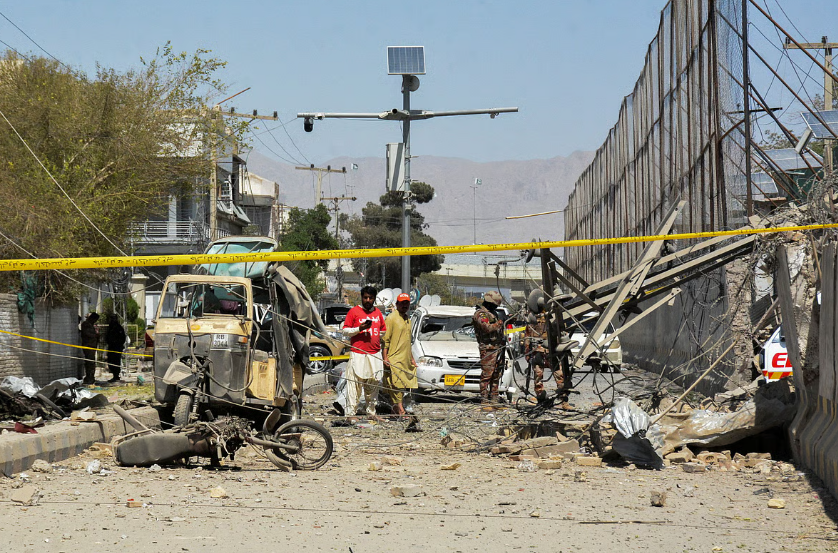
A deadly suicide bombing followed by an armed assault on a paramilitary headquarters left at least 10 people dead and dozens wounded in Quetta on Tuesday, officials confirmed, marking one of the bloodiest attacks in Pakistan’s southwest this year.
According to provincial authorities, the attack began when a suicide bomber rammed a pickup truck laden with explosives into the main gate of the paramilitary force’s compound. Moments later, several gunmen stormed the facility, sparking an intense firefight with security personnel.
Balochistan Chief Minister Sarfraz Bugti said in a televised statement that four attackers were shot dead by security forces after the initial explosion. “These cowardly attacks cannot deter us from bringing development and prosperity to our people,” he vowed, praising the response of paramilitary troops who quickly regained control of the compound.
Provincial Health Minister Bakht Kakar told Reuters that at least 10 people — both civilians and soldiers — were killed, while another 33 were injured and rushed to local hospitals. He said the toll could rise, as some of the wounded were in critical condition. The precise number of paramilitary personnel killed has not yet been confirmed.
The assault underscored the precarious security situation in Quetta, the capital of Balochistan province, which borders Afghanistan and Iran. The region has long grappled with violence by militant groups and separatist insurgents who accuse the federal government of exploiting its natural resources while neglecting local development.
In recent months, attacks targeting security forces and state infrastructure in Balochistan have intensified, raising alarm about the province’s stability. Despite heavy deployments of military and paramilitary units, armed groups continue to launch sporadic but deadly operations.
So far, no organization has claimed responsibility for Tuesday’s bombing. Analysts say both Islamist militants and Baloch separatists have previously carried out similar complex assaults involving suicide bombers and follow-up gunmen. Security experts warned the attack could signal further escalation, particularly with militant networks increasingly emboldened by instability across the border in Afghanistan.
The Pakistani government has pledged to intensify counterterrorism operations and restore peace in Balochistan, which is a linchpin of the multi-billion-dollar China-Pakistan Economic Corridor. But Tuesday’s violence highlighted the persistent challenges authorities face in securing the province.
As rescue teams cleared debris and hospitals struggled to treat the injured, Bugti reiterated the government’s determination to continue its development agenda. “We will not be held hostage by these acts of terror,” he said.
The attack is expected to draw strong condemnation from political leaders in Islamabad and may spur renewed debate about the effectiveness of Pakistan’s counterterrorism strategies in restive border regions.