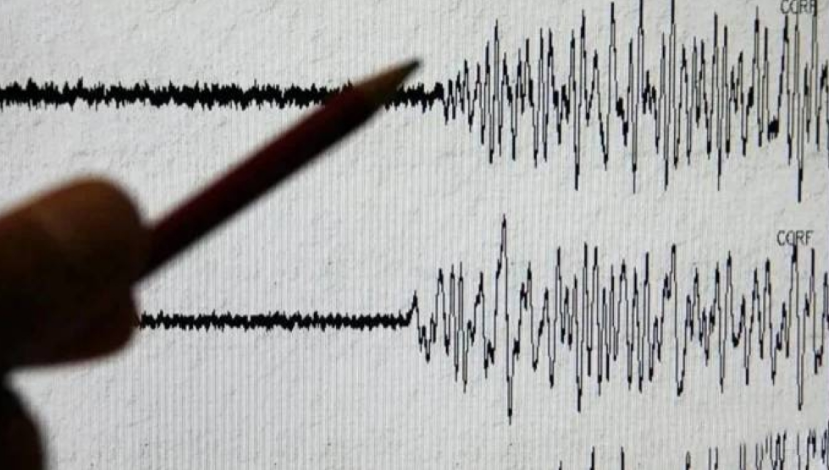
A powerful earthquake measuring 6.6 on the Richter scale struck Indonesia’s Papua province on Thursday, according to the Indonesian Meteorology, Climatology and Geophysics Agency (BMKG).
The quake was recorded at a depth of 18 kilometres, with its epicentre located about 32 kilometres east of Sarmi district in northern Papua. The tremor was felt across several parts of the province, prompting brief concern among residents. However, authorities said there were no immediate reports of casualties or significant damage.
BMKG confirmed that the earthquake did not trigger a tsunami warning. Officials urged residents to remain calm but stay alert for possible aftershocks, which are common following strong quakes in the region.
Local media reported that some residents in coastal and nearby inland areas temporarily evacuated their homes as a precaution, but most returned once it became clear that no tsunami threat existed. Emergency teams were dispatched to assess the situation and monitor for any late reports of damage in remote communities.
Indonesia frequently experiences seismic activity due to its position along the Pacific “Ring of Fire” — a geologically active zone where multiple tectonic plates converge. This region is prone to earthquakes, volcanic eruptions, and tsunamis.
The country’s disaster management agency has continued to remind communities in quake-prone areas to follow safety protocols and ensure preparedness measures are in place.
Thursday’s earthquake is one of several moderate-to-strong tremors to hit Indonesia this year. While the archipelago experiences thousands of minor quakes annually, only a handful cause significant destruction or loss of life.
Experts note that Papua, located in the easternmost part of Indonesia, is less densely populated than other parts of the country, which often limits the impact of such earthquakes. Still, they warn that the region’s proximity to complex fault lines makes it vulnerable to future seismic events.
Authorities said they would continue to monitor seismic activity in the area and provide updates if any new developments arise.
Indonesia sits atop the so-called “Ring of Fire,” a vast horseshoe-shaped belt encircling the Pacific Ocean known for its frequent volcanic eruptions and earthquakes. The nation has a long history of devastating quakes, including the 2004 Indian Ocean earthquake and tsunami, which killed more than 230,000 people across several countries.
For now, officials say the situation in Papua remains stable, with no immediate threat to life or property reported.