What should have been the busiest stretch of the year for Sri Lanka’s hill-country tourism sector has instead turned into a period of loss and uncertainty for many small business owners. Among them is Herath Gedara Rohan Anil Kumara, who ran a popular three-bedroom homestay overlooking tea estates and historic landmarks.
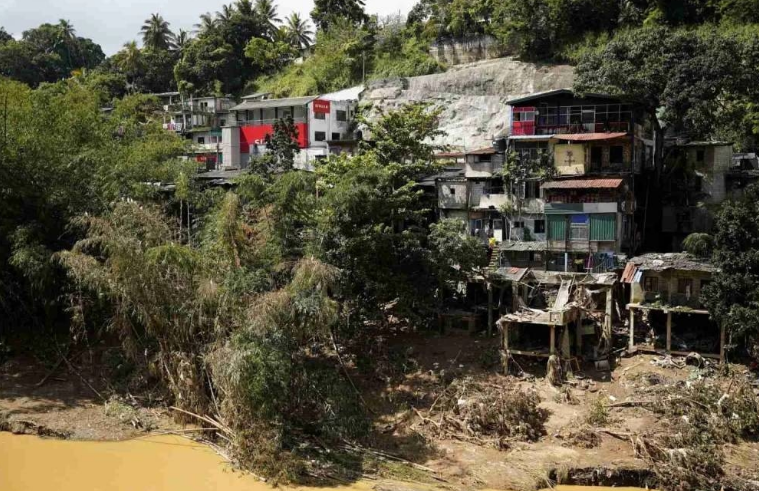
Today, Kumara and his family are staying at the Kithulbedda relief centre after Cyclone Ditwah tore across the island last week, killing nearly 500 people and displacing tens of thousands. His home, once a reliable source of income at more than $30 per night, was badly damaged, leaving him unable to host guests during the crucial November–January season.
“I’m still getting inquiries, but we can’t accept them,” the 37-year-old said. “I don’t know when we will be able to rebuild and return to normal.”
His experience reflects the strain facing small operators who make up much of Sri Lanka’s tourism workforce. Tourism is the country’s third-largest source of foreign currency after remittances and apparel, accounting for about 4% of GDP. A strong rebound over the past year had helped steady the economy after the historic financial crisis of 2022. Cyclone Ditwah has now interrupted that progress.
Government data shows the cyclone affected nearly 10% of the nation’s 22 million people. It damaged or destroyed thousands of homes and left at least 486 dead, with many still unaccounted for. Roads, power networks, telecom lines, and farmland also suffered extensive damage.
Despite the scale of destruction, industry leaders say the tourism sector remains resilient. Asoka Hettigoda, president of the Hotels Association of Sri Lanka, told Reuters that cancellations have been limited to around 1%.
“Hotels across the island are operational,” he said. “Even in Kandy and Nuwara Eliya, tourists are safe and enjoying their stay, though access is still difficult due to blocked roads.”
Tourist arrivals passed the two-million mark by mid-November, and officials expect that number to reach 2.6 million by year-end — the highest since the pandemic. Visitors from India, Russia, Germany, France, and the UK continue to account for the bulk of arrivals.
Authorities have introduced several emergency measures to keep travel disruptions minimal. These include airlifting stranded tourists, waiving overstay penalties, and allowing free rescheduling of flights. Industry groups are advocating an expanded visa-free entry programme and investing in social-media outreach to reassure potential visitors. Tour guides are adjusting routes to avoid the most damaged regions.
For many travellers, the cyclone has become an unexpected part of their visit. Estelle Burgess, a 71-year-old tourist from Australia, arrived a week ago and plans to complete her stay.
“We’re hoping the weather improves so we can enjoy the beach,” she said outside Kandy’s Temple of the Tooth, a major Buddhist shrine. “Sri Lanka truly is an adventure. You never know what’s going to happen next.”