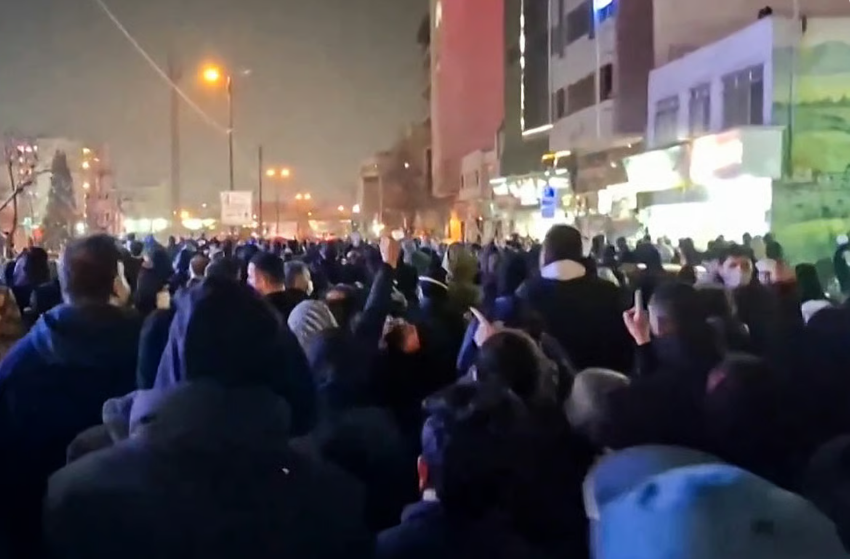
Iran has been gripped by its largest wave of demonstrations since 2022, as anti-government protesters clashed with authorities despite a nationwide internet blackout aimed at curbing the spread of information.
Pro-government groups condemned what they described as “riots”, while Supreme Leader Ayatollah Ali Khamenei said Iran “would not back down” in the face of “saboteurs”. Security forces were deployed across major cities as authorities sought to regain control of public order.
Although communications inside the country were heavily restricted, images and reports continued to emerge through overseas networks, prompting solidarity protests in several countries. US President Donald Trump warned of possible military action if Iranian authorities used deadly force against demonstrators.
The unrest has led to swift diplomatic responses. New Zealand closed its embassy in Tehran on January 16 and evacuated staff to Turkey, citing a deteriorating security environment. Two days earlier, the British embassy temporarily shut its doors, with the ambassador and consular staff evacuated following a security assessment. Portugal also announced the closure of its embassy “until further notice”.
Air travel was briefly affected when Iranian airspace was closed for nearly five hours on January 14. Flights were diverted or rescheduled, including services operated by flydubai, IndiGo and Air India. Although the closure was lifted later, airlines warned that rerouting had increased travel times for international flights passing through the region.
Governments worldwide issued travel advisories. India urged its citizens to avoid travel to Iran and to stay away from protest areas. The United States warned that Americans face a high risk of questioning, arrest or detention, noting that possession of a US passport alone could lead to detention. Portugal contacted all of its citizens in Iran, confirming that eight had left while 10 chose to remain. The UK warned that travel against official advice could invalidate insurance coverage.
Tensions were heightened by Trump’s announcement on January 12 that the US would impose 25 per cent tariffs on any country doing business with Iran. No formal policy document has yet been released. Iran’s key trading partners include China, Iraq and the UAE. UAE Minister of Foreign Trade Thani Al Zeyoudi said there was still no clarity on how the tariffs would be enforced or whether food imports would be affected.
Oil markets reacted cautiously. Brent crude rose to $64.26 a barrel, while US West Texas Intermediate reached $59.67. Analysts said concerns remain over potential disruptions to shipping through the Strait of Hormuz, a critical route for global energy supplies.
IG analysts said supply risks linked to Iran were keeping markets nervous in the short term, while Phillip Nova analyst Priyanka Sachdeva said prices were likely to remain within a narrow range unless demand rises sharply or supply routes are disrupted.