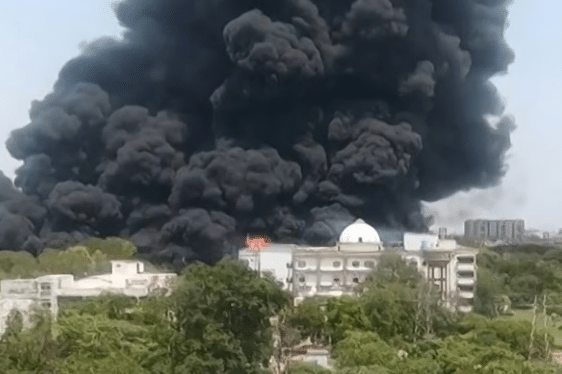
Indian aviation authorities have released a preliminary report into the catastrophic Air India crash that killed all 260 people on board last month, describing a series of unexplained events in the moments after takeoff from Ahmedabad on June 12.
The Aircraft Accident Investigation Bureau (AAIB) published initial findings on Saturday into what is now considered the deadliest aviation disaster globally in over a decade. The final report is expected within a year, but investigators have already identified several troubling details that may shed light on the fatal sequence.
The Air India Boeing 787 Dreamliner was en route to London when it crashed into a residential building shortly after takeoff. Among the most startling revelations was that the aircraft’s fuel control switches flipped from “run” to “cutoff” within three seconds of liftoff, a move typically reserved for emergencies or after engines are shut down at a gate.
The cockpit voice recorder captured one pilot questioning the other about why the fuel was cut off—only to be told it wasn’t. The report does not identify who made the remarks or whether the flip was due to human error or a technical fault. No system warnings or emergencies were reported that would have necessitated shutting down the engines.
Soon after the cutoff, the plane lost thrust and began to sink. Surveillance footage confirmed the deployment of a ram air turbine—a backup energy source—just moments after takeoff, indicating a severe power failure.
The aircraft crashed into a building at 08:09 GMT, shortly after one of the pilots issued a “Mayday” distress call. The AAIB confirmed that no hazardous materials were onboard, and the plane’s weight at takeoff was within the prescribed limit of 213,401 kg.
Captain Sumeet Sabharwal, 56, who was also a flight instructor, and First Officer Clive Kunder, 32, were piloting the aircraft. Sabharwal had over 15,000 hours of flight experience.
The AAIB stated that there are no immediate safety recommendations for Boeing or engine manufacturer GE, nor any indication at this stage of mechanical failure caused by the aircraft or engines. However, international agencies including the US National Transportation Safety Board (NTSB), the Federal Aviation Administration (FAA), and the UK’s Air Accidents Investigation Branch (AAIB) are assisting in the ongoing investigation.
Authorities stressed that further analysis and evidence gathering are still underway as they work to determine the precise cause of the disaster.