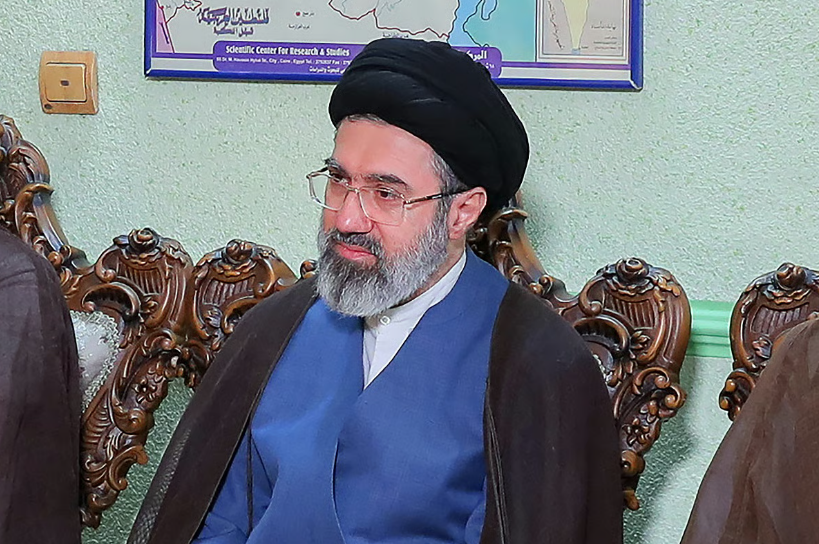
Iran’s Assembly of Experts has selected Mojtaba Khamenei, the son of the late Ayatollah Ali Khamenei, as the country’s new supreme leader following his father’s death in an air strike last week, according to Iranian media reports.
The clerical body reportedly chose the 56-year-old mid-ranking cleric more than a week after the long-time leader was killed during the ongoing US-Israeli air campaign against Iran. The appointment signals that hardline figures remain firmly in control of the Islamic Republic’s political structure.
Ayatollah Mohsen Heidari Alekasir, a member of the Assembly of Experts, confirmed in a video statement on Sunday that a successor had been selected. He said the choice reflected guidance from the late supreme leader that Iran’s top authority should be someone “hated by the enemy.”
“Even the Great Satan has mentioned his name,” Heidari Alekasir said, referring to the United States. His comment came shortly after US President Donald Trump publicly described Mojtaba Khamenei as an “unacceptable” choice.
Although Mojtaba Khamenei has never held an official government position, he has built considerable influence within Iran’s political and security establishment over the past two decades. He is widely known for his close ties to the Islamic Revolutionary Guard Corps and the powerful economic networks connected to the security forces.
Analysts say his relationship with the Revolutionary Guards has strengthened his standing among hardline factions. Kasra Aarabi, head of research on the IRGC at United Against Nuclear Iran, said Mojtaba enjoys strong backing within the organisation, particularly among younger hardliners.
“He has strong constituency and support within the IRGC, especially among the younger radical generations,” Aarabi said.
As supreme leader, Mojtaba Khamenei will hold ultimate authority over Iran’s political system. The role carries final decision-making power on key issues including foreign policy, defence strategy, and the country’s nuclear programme.
Western governments have long expressed concern about Iran’s nuclear activities and have sought to prevent Tehran from developing nuclear weapons. Iranian officials insist the programme is intended for civilian energy purposes.
Born in 1969 in the religious city of Mashhad, Mojtaba grew up during the revolutionary period that brought his father and other clerics to power in 1979. He later served in the Iran-Iraq war and pursued religious studies in the seminaries of Qom, Iran’s centre of Shiite scholarship.
He holds the clerical rank of Hojjatoleslam, which is below the rank of Ayatollah held by his father and by Ruhollah Khomeini, the founder of the Islamic Republic. Critics have argued that his credentials may not meet the traditional expectations for the position.
Mojtaba Khamenei has also faced sanctions from the United States. In 2019, the US Treasury Department imposed penalties on him, accusing him of representing the supreme leader in an official capacity and coordinating with the Revolutionary Guards and affiliated militia groups.
Inside Iran, his influence has long been controversial. Critics argue that his rise resembles dynastic succession, something many Iranians opposed when the monarchy was overthrown in 1979.
His appointment comes during a period of intense regional conflict and domestic uncertainty, with observers watching closely to see how Iran’s new leader shapes the country’s political direction.