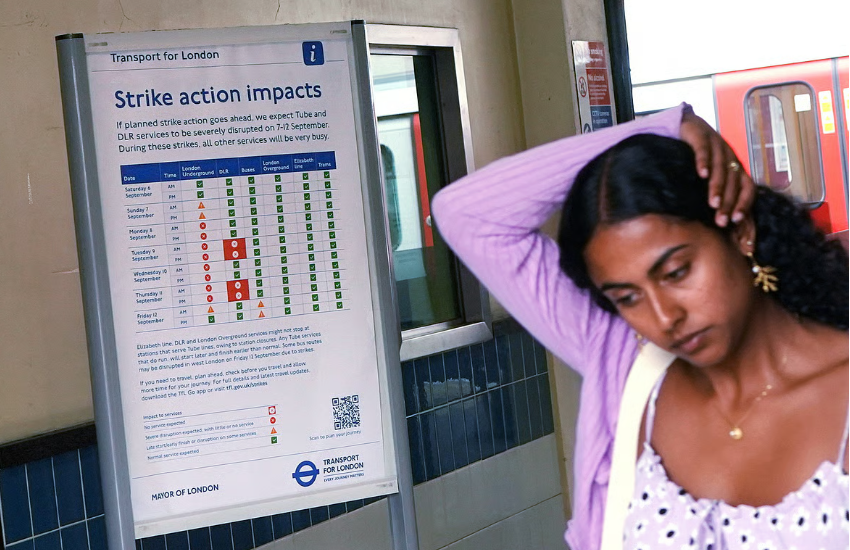
London’s transport system ground to a halt on Monday as workers on the Underground launched a week-long strike over pay and working conditions, leaving commuters and tourists scrambling for alternatives.
The walkout, called by the Rail, Maritime and Transport (RMT) union, has forced almost all Tube services to shut down between Monday and Thursday. The Docklands Light Railway, which links Canary Wharf and the City of London, will also be out of service on Tuesday and Thursday, compounding the disruption across the capital.
The strike sparked widespread delays during the Monday morning rush hour, with many Londoners resorting to cycling or navigating longer, more complicated journeys to reach their destinations. “The prospect of it being all week, it’s a bit of a nightmare,” said Laura Sutton, 46, a legal counsel who was among the stranded crowds near London Bridge station. “It’s probably taken me twice as long to get in this morning.”
At the heart of the dispute are pay, shift patterns, fatigue management, and union demands for a shorter working week. RMT General Secretary Eddie Dempsey defended the action, arguing that workers’ health and wellbeing were being compromised. “They are not after a king’s ransom, but fatigue and extreme shift rotations are serious issues impacting our members,” he said.
Transport for London (TfL), which oversees the network, said it had been negotiating to avert the strike and had tabled a 3.4% pay increase. However, the union has insisted that only a deal reducing the working week—currently 35 hours—would be acceptable. “We have been working hard to resolve this, but the demands go beyond what is financially sustainable,” a TfL spokesperson said.
Despite the shutdown, some services remained in operation. The Elizabeth Line, which provides connections to Heathrow Airport, and London Overground trains were running with only minor disruption, offering limited relief for travelers.
The strikes are also rippling through the city’s cultural calendar. British band Coldplay announced that two scheduled concerts at Wembley Stadium would be postponed, while U.S. singer Post Malone delayed his London shows until later this month. Event organizers cited concerns about fans being unable to reach the venues.
For now, Londoners face several more days of travel disruption as the union and TfL remain deadlocked. With commuters, businesses, and visitors all affected, pressure is mounting on both sides to find a compromise before the strikes drag on further.