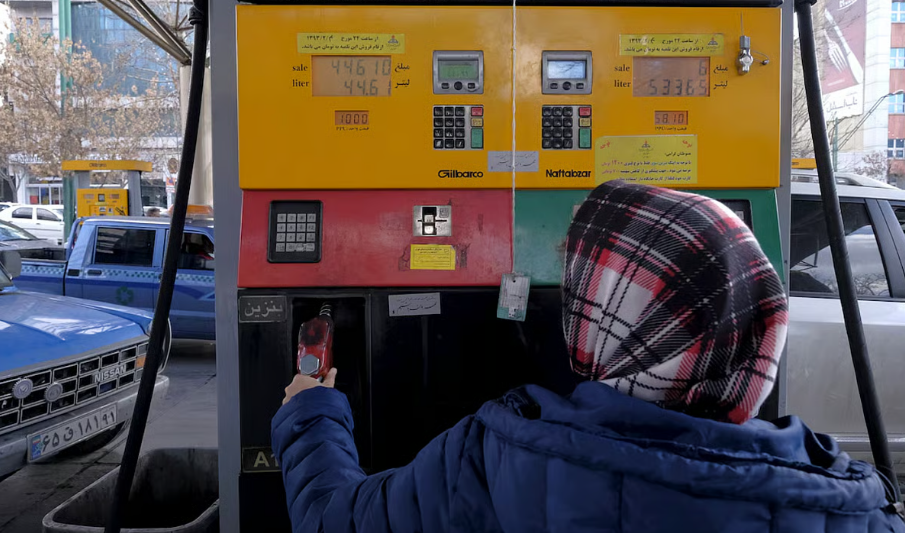
Iran raised the price of its subsidised gasoline for most drivers on Saturday, officials announced, as the OPEC member aims to manage rising fuel demand while avoiding public unrest.
The price adjustment affects most vehicles, with the exception of ambulances, which will now pay 50,000 rials per litre. This is about four US cents below the prevailing free-market rate, according to government spokesperson Fatemeh Mohajerani, who spoke on state television. The higher price applies to consumers using more than 160 litres of fuel per month.
The new pricing scheme allows other drivers to continue purchasing up to 60 litres per month at 15,000 rials per litre, with an additional 100 litres available at 30,000 rials per litre. Taxi quotas remain unchanged under the updated regulations.
Mohajerani explained that the increase is intended to reduce domestic fuel consumption and curb smuggling. Gasoline in Iran has long been heavily subsidised, resulting in some of the lowest prices worldwide. Efforts to raise the cost have often been delayed amid concerns about sparking public protests. A notable example occurred in 2019 when fuel price hikes led to widespread demonstrations that were met with a severe crackdown.
Iran’s government has faced ongoing challenges in balancing fuel subsidies with economic pressures. The subsidies have historically placed a heavy burden on state finances while encouraging higher domestic consumption and illegal fuel trade. By targeting higher consumption levels, authorities hope to reduce these pressures without provoking mass discontent among ordinary citizens.
The adjustment comes amid broader efforts by Iran to stabilise its economy amid rising domestic demand for gasoline. Fuel smuggling has also remained a persistent problem, with subsidised gasoline often illegally exported to neighbouring countries where prices are significantly higher. The new pricing structure is expected to make such smuggling less profitable, while still keeping basic fuel affordable for the majority of drivers.
State media reports highlighted that the new rates will go into effect immediately, signaling the government’s intention to act decisively in managing energy resources. Analysts say that while the price increase is modest compared to global standards, it marks a significant policy shift in a country where subsidised fuel has long been seen as a social entitlement.
By targeting only high-volume consumers, the government aims to maintain public support while addressing structural issues in fuel distribution and consumption. The move underscores Iran’s ongoing struggle to reform energy subsidies and limit black-market trade without triggering political instability.