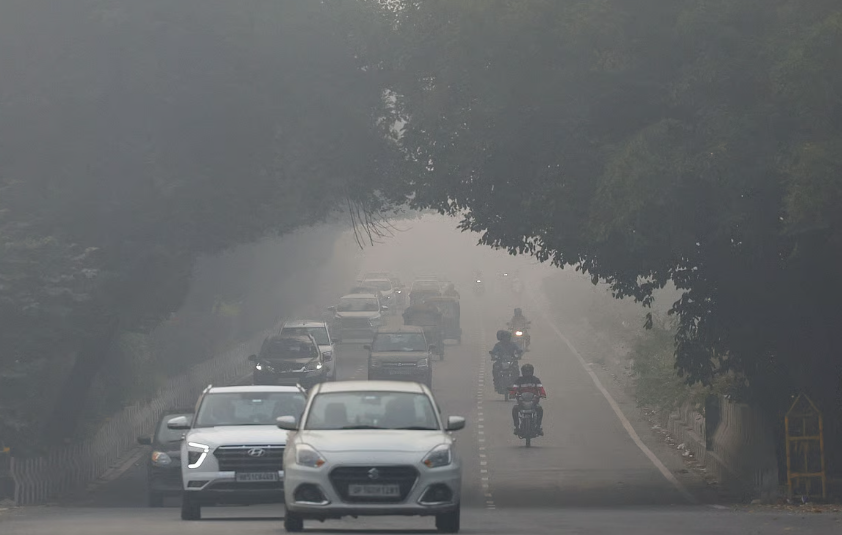
India carried out its first-ever cloud seeding trial over New Delhi on Thursday, in a bid to tackle the capital’s suffocating air pollution by inducing artificial rain to wash toxic particles from the atmosphere.
The experimental operation, led by the Indian Institute of Technology (IIT) Kanpur in collaboration with Delhi’s city authorities, involved a Cessna light aircraft releasing chemical flares into clouds above the city’s northern Burari area. The flares were designed to trigger rainfall by encouraging moisture condensation in the clouds.
Delhi Minister Manjinder Singh Sirsa confirmed the test flight, describing it as a “proving flight” aimed at assessing the aircraft’s readiness and the coordination between the various agencies involved. “A trial seeding flight was done in which cloud seeding flares were fired,” Sirsa said in a statement. “This flight was conducted to check the capabilities for cloud seeding, endurance of the aircraft, and the functionality of the seeding equipment.”
The trial marks the first step in a broader plan to combat New Delhi’s worsening air quality. Chief Minister Rekha Gupta said that, weather permitting, the capital could see its first artificial rainfall on October 29. However, officials did not specify what chemical was used during the test.
Home to more than 30 million people, New Delhi routinely ranks among the world’s most polluted capitals. Each winter, a toxic haze descends over the city, trapping emissions from vehicles, factories, and nearby crop burning. The situation worsens during the festive season when fireworks are set off for Diwali, the Hindu festival of lights.
This week, pollution levels spiked dramatically following days of fireworks, with PM2.5 concentrations — fine, cancer-causing particles small enough to enter the bloodstream — soaring to more than 56 times the World Health Organization’s recommended daily limit. Early Thursday, IQAir monitoring data recorded PM2.5 levels at 154 micrograms per cubic metre in some parts of the city, about ten times the WHO guideline.
The worsening air quality has not only affected public health but is also damaging Delhi’s heritage sites. A study published in Heritage journal in September found that air pollution is forming a black crust on the surface of the 17th-century Red Fort, a UNESCO World Heritage Site.
Cloud seeding, developed in the 1940s, has been used globally to induce rainfall, ease drought conditions, and even clear fog from airports. China notably used the technique ahead of the 2008 Beijing Olympics to control weather around the stadium. However, scientists remain divided over its effectiveness, with studies suggesting that results are often inconsistent and short-lived.