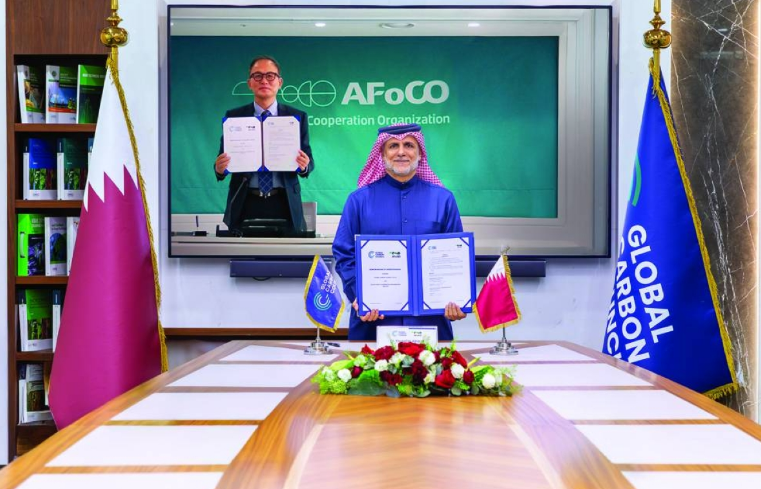
The Global Carbon Council (GCC) and the Asian Forest Co-operation Organisation (AFoCO) have signed a memorandum of understanding to deepen collaboration on climate action, with a focus on nature-based solutions and the development of a credible carbon market ecosystem across Asia.
The agreement was formalised at a ceremony attended by Dr Yousef Alhorr, founding chairman of the GCC, and Dr Chongho Park, executive director of AFoCO. The partnership reflects growing international concern over the funding gap facing global forest conservation and restoration efforts.
The move follows the United Nations Environment Programme’s first State of Finance for Forests report, which found that annual global investment in forests must rise from $84 billion in 2023 to $300 billion by 2030 to meet climate and biodiversity goals. The current shortfall of $216 billion a year has raised alarm among policymakers and environmental groups, who argue that new financing channels are urgently needed.
Under the MoU, the two organisations will work to promote public–private partnership programmes that use carbon incentives to support nature-based projects. These initiatives will align with AFoCO’s land-use and forestry programmes and with the Paris Agreement, including its Article 6 framework for international carbon markets. The aim is to attract private investment while maintaining strict environmental and social standards.
Officials said the partnership will prioritise transparency and verification to ensure that carbon credits generated from forest and land-use projects deliver real climate benefits and support long-term community resilience. Projects will be carried out in close cooperation with AFoCO’s member countries, with attention given to local livelihoods and ecosystem protection.
Dr Alhorr said forests remain one of the world’s strongest natural tools against climate change, noting that Asian forest sinks already absorb nearly one billion tonnes of carbon dioxide each year. He said the new partnership would combine technical expertise with governance and market frameworks to deliver results that are both measurable and trustworthy.
Dr Park said the agreement would strengthen AFoCO’s ability to help member states expand sustainable forestry projects in a structured and systematic way. He added that the collaboration would improve access to knowledge, tools, and capacity-building support for countries facing increasing climate risks.
Following the signing, the two organisations will establish a joint working group to identify priority projects, coordinate technical assistance, and oversee implementation. Planned activities include workshops, regional events, and joint pilot programmes designed to demonstrate how carbon markets can support forest protection and restoration.
The partnership comes as Asian countries face rising pressure to balance economic growth with environmental protection. With forests playing a critical role in climate stability, biodiversity, and rural livelihoods, GCC and AFoCO say their cooperation will focus on turning long-term climate commitments into practical action on the ground.