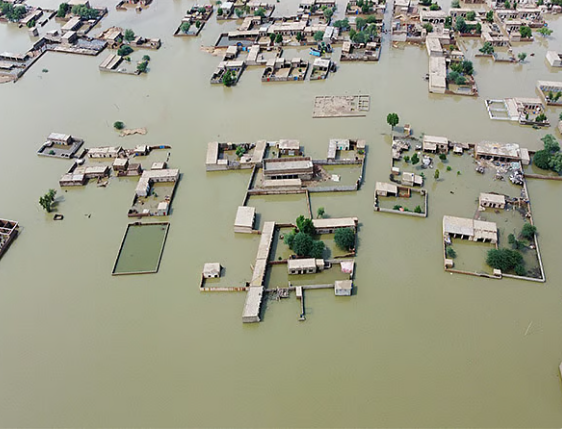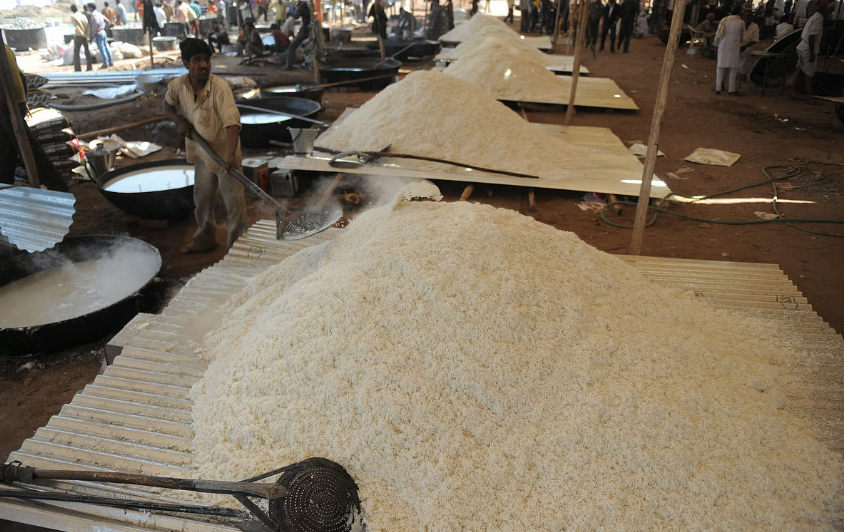
Heavy monsoon rains and flooding across key rice-growing regions in India and Pakistan have disrupted production of basmati rice, raising concerns about reduced supplies and pushing prices higher in global markets.
The two South Asian neighbors are the world’s exclusive producers of aromatic basmati rice, a premium variety that commands nearly twice the price of regular rice and is widely exported to Britain, the Middle East, and the United States. Both countries were anticipating a bumper crop this season, but flooding in recent weeks has cast doubt on those expectations.
In India, the northern states of Punjab and Haryana, which account for more than 80 percent of the country’s basmati output, were among the hardest hit. Overflowing rivers—including the Ravi, Chenab, Sutlej, and Beas—flooded vast tracts of farmland in late August and early September. A government official said nearly one million hectares of crops, including paddy, cotton, and pulses, were affected in the two states.
Across the border, Pakistan’s Punjab province, responsible for more than 90 percent of the nation’s basmati rice production, also suffered extensive damage. Crops such as rice, sugarcane, corn, vegetables, and cotton were submerged in floodwaters, according to local officials.
The timing of the floods has been particularly damaging, coming just as paddy and cotton fields were nearing harvest. Farmers are facing heavy losses as seedlings transplanted in June and July were expected to mature by late September.
“Conservative estimates put the damage at 20 percent of basmati rice grown in Pakistan,” said Ibrahim Shafiq, export manager at Latif Rice Mills Pvt Ltd. “This will definitely drive up the price for basmati rice in both local and international markets.”
Traders have already raised basmati export prices by $50 per ton over the past week, according to Nitin Gupta, senior vice president at Olam Agri India. He warned that prices could climb further if crop losses remain significant at the end of the harvest season.
Despite the setbacks, some industry officials believe the impact may be temporary. Karachi-based trader Chela Ram Kewlani noted that the price surge has been fueled partly by reports of crop damage and could stabilize once new-season supplies reach the market.
For now, the outlook hinges on weather conditions in the coming weeks. With waters beginning to recede, experts say further losses may be contained—provided there is no additional heavy rainfall.
As one of South Asia’s most valuable agricultural exports, any prolonged disruption in basmati rice supplies could ripple across global markets, affecting both retailers and consumers in countries where the fragrant grain is a staple.