An explosion ripped through a mosque in the northeastern Nigerian city of Maiduguri and killed at least seven worshippers Wednesday, witnesses and security sources told AFP. No armed groups immediately claimed responsibility for what anti-militant militia leader Babakura Kolo described as a suspected bombing.
Maiduguri is the capital of Borno state, a region long affected by a violent insurgency carried out by jihadist groups Boko Haram and its offshoot, the Daesh West Africa Province. While the city itself has largely avoided major attacks in recent years, the northeast has remained volatile, with militant activity spilling over into neighboring Niger, Chad, and Cameroon.
The blast occurred inside a mosque located in the busy Gamboru market, just as Muslim faithful gathered for evening prayers around 6:00 pm local time (1700 GMT). Malam Abuna Yusuf, one of the mosque’s leaders, reported eight deaths, although official figures have not yet been confirmed. Police spokesman Nahum Daso told AFP, “We can confirm there has been an explosion,” and added that an explosive ordnance disposal team was already at the scene.
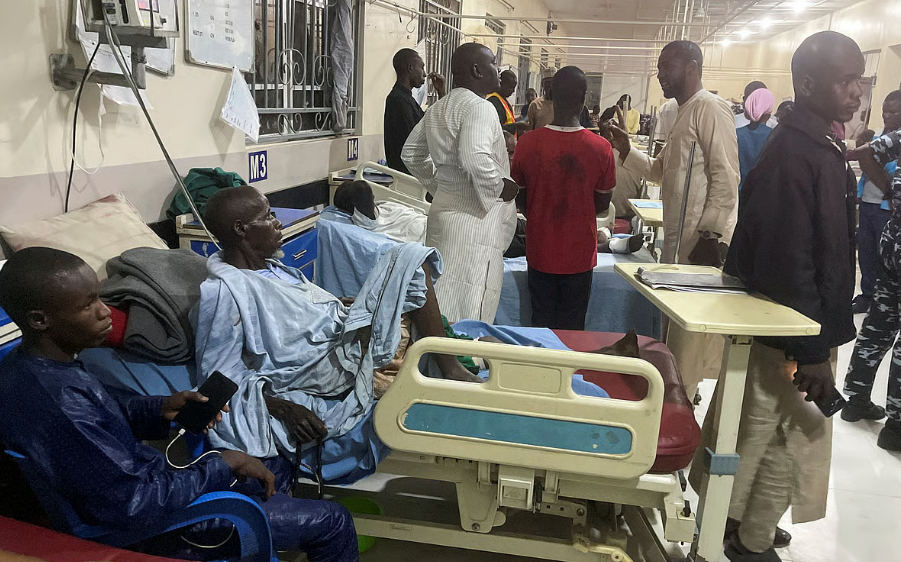
Kolo said the bomb appeared to have been planted inside the mosque and detonated midway through prayers, though some witnesses suggested it may have been a suicide attack. Details on the number of injured remain unclear, but witness Isa Musa Yusha’u told AFP that many victims were being rushed to hospitals for treatment. Videos circulated online showed at least one person covered in blood and other casualties obscured under sheets.
An international NGO issued a security alert advising staff to avoid the Gamboru market area.
The attack serves as a stark reminder of the region’s deadly insurgency, which has claimed at least 40,000 lives and displaced around two million people since 2009, according to United Nations estimates. While military operations have reduced the frequency of attacks in recent years, analysts warn that jihadist groups remain capable of carrying out lethal operations, particularly in rural areas of Borno state.
Maiduguri, once the scene of nightly gun battles and bombings, has experienced relative calm, with the last major attack recorded in 2021. Military patrols and checkpoints remain a daily feature of city life, and armored vehicles filled with soldiers can be seen throughout the capital. Markets, once closing early due to insecurity, now extend into the evening, reflecting a fragile return to normalcy.
Despite the appearance of stability, the insurgency continues to simmer in surrounding areas, raising concerns that violent incidents may increase again in the northeast.