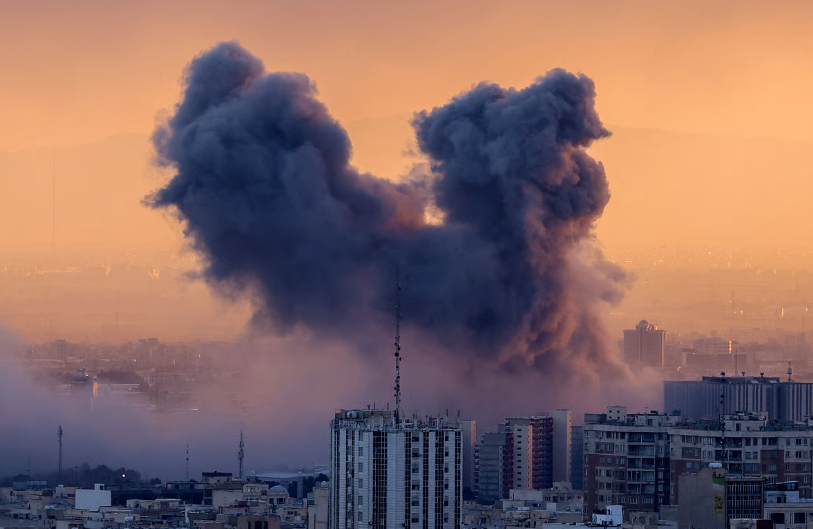
Environmental experts say ongoing strikes and fires at oil facilities in parts of the Middle East could pose risks not only to infrastructure and communities but also to wildlife, particularly the millions of birds that migrate across the region every year.
The Arabian Gulf lies along major migratory routes that connect Europe, Central Asia, Africa and South Asia. Wetlands, mudflats and coastal habitats across the Gulf serve as important resting and feeding areas for birds travelling long distances between these continents.
Scientists say the smoke, pollution and repeated explosions linked to the ongoing tensions involving the United States, Israel and Iran could disturb these fragile ecosystems and affect birds moving along established migration corridors.
Wildlife expert Reza Khan said military conflicts often harm the natural environment along with human populations. Khan, author of the book Birds of Dubai, said explosions and burning industrial facilities can place severe pressure on wildlife habitats.
“Military conflicts rarely affect only people,” Khan said in comments to Khaleej Times. “Explosions, burning oil and gas facilities and drifting smoke can place severe pressure on wildlife and ecosystems.”
Environmental researchers often point to the environmental damage caused by the 1991 Gulf War as a warning of the potential consequences. Studies conducted after that conflict estimated that between 20,000 and 30,000 seabirds died in the Arabian Gulf when large oil spills contaminated coastal habitats.
In some locations, mortality rates among seabirds reached between 22 and 50 percent, particularly among species such as cormorants and grebes.
During the 1991 conflict, hundreds of oil wells in Kuwait were set ablaze, sending thick smoke clouds into the atmosphere. The plumes were so extensive that they were visible from space and darkened skies across the region for months. According to Khan, the smoke contained soot, sulphur compounds and other toxic gases that could cause respiratory stress and poisoning in birds.
Pollution can also interfere with insect activity, an important food source for many migratory species.
Birds such as flamingos, herons, waders and seabirds depend on Gulf wetlands and coastal areas as crucial stopover points during long migrations. Experts say disturbances in these habitats could reduce feeding opportunities and force birds to change routes that have been followed for generations.
Loud explosions, aircraft activity and fires may frighten birds and drive them away from feeding or breeding grounds. Sudden noise can trigger panic flights that force birds to use valuable energy reserves needed for migration. Night-flying species may also become disoriented by flames from burning facilities.
Despite these concerns, bird watchers in the United Arab Emirates say it is still too early to determine whether the current conflict is having a noticeable effect on bird populations.
Emirati bird watcher Khalifa Al Dhaheri said the environmental impact so far appears far smaller than what occurred during the 1991 conflict.
“Things are being handled very effectively across the region,” Al Dhaheri said. “Unlike the Gulf War, we are not seeing anything of that magnitude.”
He noted that the fighting has lasted only a short time and there is no clear evidence yet of significant disruption to migration patterns.
Scientists also warn that environmental damage may persist even after hostilities end. Oil residues and other pollutants can remain in sediments and coastal habitats for years, affecting marine life and the food chains on which many bird species depend.
Many migratory birds that stop in the Gulf breed thousands of kilometres away, meaning disturbances in this region can have far-reaching consequences for bird populations across several continents.