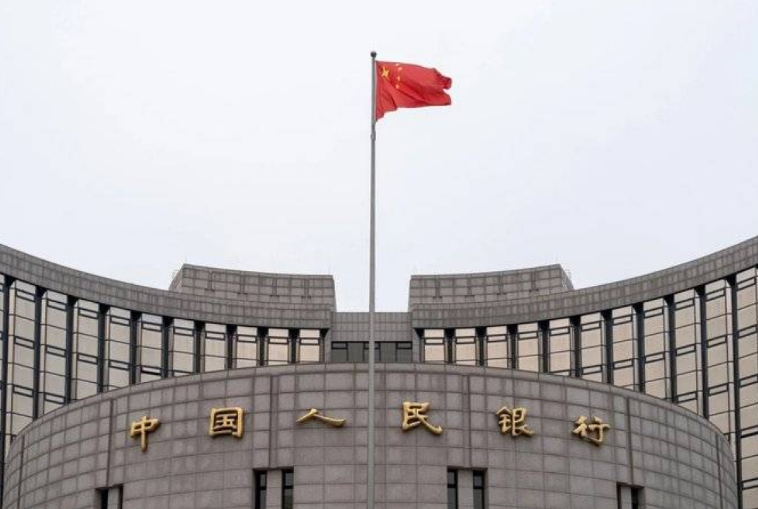
The People’s Bank of China (PBOC) announced on Friday that it will provide 600 billion yuan ($84.13 billion) in funding through a one-year medium-term lending facility (MLF) on Monday, part of its efforts to ensure sufficient liquidity in the country’s financial system.
According to a statement released by the central bank, the operation will be carried out using a fixed-quantity method, interest rate bids, and multiple-price bids. The measure is aimed at stabilizing interbank liquidity conditions and supporting credit flows at a time when policymakers are balancing economic recovery goals with ongoing concerns over financial risks.
The MLF is one of the PBOC’s key monetary policy tools, allowing commercial banks to borrow funds from the central bank using eligible collateral. It plays an important role in guiding lending rates in the broader economy, particularly the loan prime rate (LPR), which serves as the benchmark for corporate and household borrowing.
Economists say the sizeable injection signals the PBOC’s determination to maintain market confidence as China faces a complex economic environment. Sluggish consumer demand, continued pressure on the property market, and global trade uncertainties have fueled speculation that the central bank could step up liquidity support in the second half of the year.
“The size of this operation reflects the authorities’ focus on preventing funding strains in the banking sector, while also laying the groundwork for keeping borrowing costs stable,” said a Shanghai-based analyst at an international investment bank.
In recent months, the PBOC has sought to strike a delicate balance between stimulating growth and managing debt risks. While inflation remains subdued, policymakers have been cautious about aggressive easing, mindful of capital outflows and the weakening yuan. By relying on the MLF, the central bank can provide targeted liquidity without resorting to a broad interest rate cut.
The new injection will also help banks roll over existing MLF loans that are set to mature, preventing a sudden drain on liquidity. “By conducting the operation at this scale, the PBOC is making sure the financial system remains well supplied with cash as credit demand ebbs and flows,” said the analyst.
China’s economy expanded at a modest pace in the first half of the year, with official data showing growth driven by exports and industrial production but weighed down by weaker domestic spending. Investors will closely watch Monday’s operation for clues about the PBOC’s monetary policy stance heading into the final quarter.
The bank has not yet disclosed the interest rate for the upcoming MLF operation. Markets expect it to remain largely unchanged, signaling continuity in the PBOC’s approach as it looks to stabilize growth while containing financial risks.