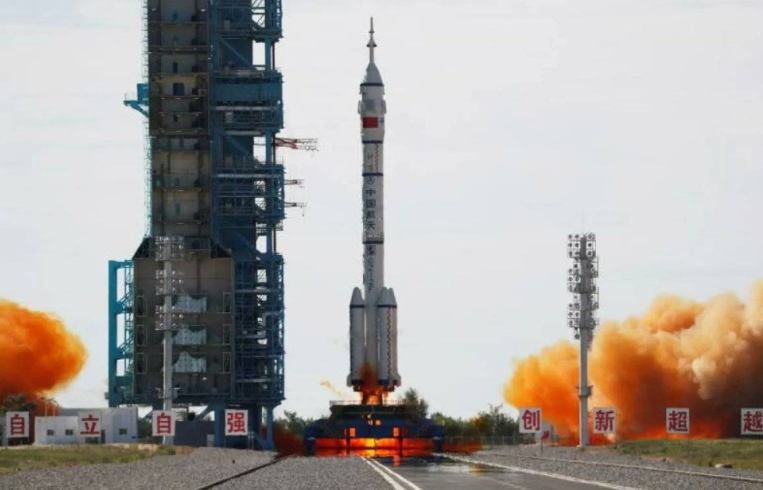
China successfully launched two new test satellites on Monday morning, marking another step in its fast-expanding space program. The satellites, named Shiyan-30 01 and Shiyan-30 02, were sent into orbit aboard a Long March-2D carrier rocket from the Xichang Satellite Launch Center in Sichuan province at 11:00 a.m. local time.
According to state media agency Xinhua, both satellites entered their designated orbits as planned shortly after liftoff. The mission will support the experimental verification of advanced Earth observation technologies, though officials did not provide further details about the satellites’ specific capabilities or intended applications.
The launch highlights China’s continued emphasis on developing dual-use space technologies that serve both civilian and potential defense purposes. While authorities describe the Shiyan series as designed for scientific research and technological testing, analysts often point to the blurred line between civilian and military uses in Beijing’s space activities.
The successful flight was the 598th mission for the Long March family of carrier rockets, the backbone of China’s space launch program since the 1970s. The Long March-2D, in particular, is a workhorse medium-lift rocket that has frequently been used to deploy satellites for Earth observation, remote sensing, and scientific experiments.
China has invested heavily in expanding its space capabilities over the past decade, with milestones including the launch of its own space station, Tiangong, and ambitious lunar and Mars exploration programs. The country is also working to develop next-generation rockets, reusable launch vehicles, and satellite constellations to compete with the United States and private players such as SpaceX.
In recent months, China has accelerated the pace of its satellite launches, reflecting growing demand for high-resolution imaging, communication, and navigation services. Earth observation satellites, such as the newly launched Shiyan models, play a crucial role in areas ranging from environmental monitoring and disaster relief to agricultural planning and urban development.
Beyond civilian uses, these satellites can also enhance China’s surveillance and reconnaissance capabilities, providing data that can be applied in both domestic governance and strategic defense.
The Xichang Satellite Launch Center, located in Sichuan’s Liangshan Yi Autonomous Prefecture, is one of China’s key inland launch sites and has hosted numerous high-profile missions, including deployments of BeiDou navigation satellites. Its location in the mountainous southwest provides favorable conditions for launching payloads into geostationary and low Earth orbits.
With the latest mission, China has reaffirmed its determination to remain at the forefront of space exploration and satellite technology. The nation has already conducted dozens of launches this year and is on track to challenge its own record number of annual missions.
As Beijing pushes forward with its space ambitions, the latest test satellites underscore the importance it places on innovation in Earth observation technologies — a field that is increasingly shaping not only scientific research but also economic development and national security strategies worldwide.