China has issued a sharp warning to Japan, cautioning against any use of force in relation to Taiwan. The statement comes amid rising tensions between the two nations over recent remarks by Japanese Prime Minister Sanae Takaichi. Beijing indicated that any intervention in Taiwan by Japan would be met with a firm and decisive response.
In addition, China advised its citizens to avoid traveling to Japan, reflecting the government’s anger over Takaichi’s comments. The prime minister sparked the diplomatic dispute last week when she suggested in parliament that a Chinese attack on Taiwan could be seen as a threat to Japan’s survival, potentially prompting a Japanese military response.
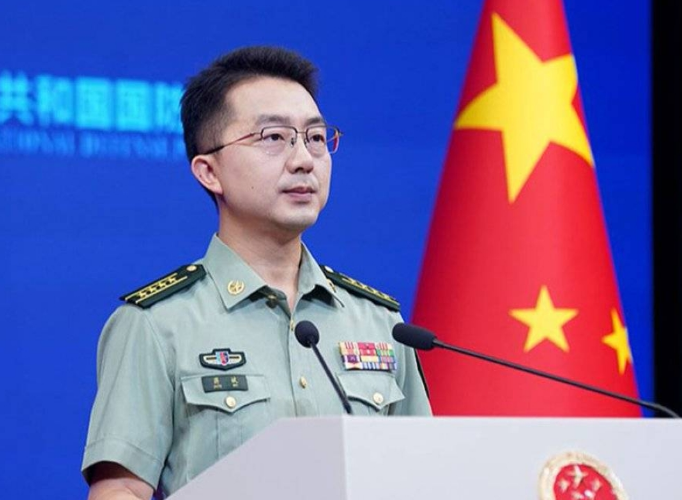
The situation escalated after China’s Ambassador to Japan, Wu Jianghao, posted comments about Takaichi on the platform X, prompting Tokyo to summon him to formally lodge a protest. Beijing described Takaichi’s statements as highly irresponsible and dangerous. A spokesperson for China’s Ministry of Defense warned that any attempt by Japan to interfere in Taiwan could result in a “crushing defeat,” underscoring the seriousness of China’s position.
This came shortly after China’s Foreign Ministry summoned the Japanese ambassador in Beijing to express its strong opposition to the remarks. The Chinese spokesperson also raised concerns about Japan’s recent military and security decisions, particularly ambiguity surrounding its non-nuclear principles. He noted that Japan’s decision not to rule out the acquisition of nuclear-powered submarines represents a significant shift in policy, which Beijing views as destabilizing.
Within Japan, reactions to China’s statements have varied. Some prominent political figures called for the Chinese ambassador to be expelled. However, the Japanese government has limited its response to requesting Beijing take “appropriate measures,” without providing further details.
This incident marks the first time in over two years that China has summoned the Japanese ambassador. The last occasion occurred in August 2023, when China protested Tokyo’s decision to release treated wastewater from the Fukushima nuclear plant into the sea.
Analysts note that tensions over Taiwan have long been a sensitive issue in Sino-Japanese relations. Recent exchanges highlight growing unease on both sides as regional security dynamics evolve. The standoff over Takaichi’s statements adds another layer to the complex relationship between Beijing and Tokyo, which has been strained by territorial disputes, historical grievances, and differing security policies.
As the situation unfolds, officials in both countries are expected to monitor developments closely. Observers suggest that further diplomatic engagement will be necessary to prevent escalation and maintain stability in the East Asia region.