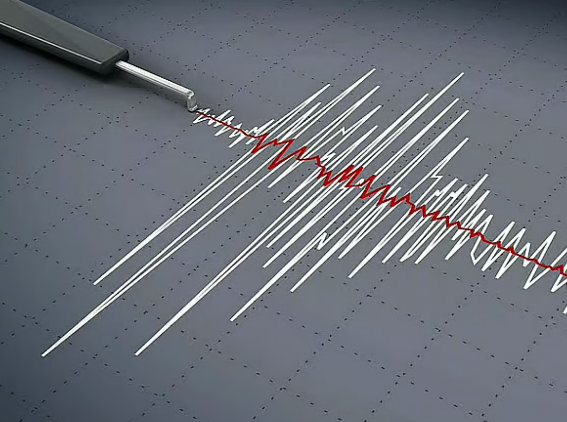
The National Centre of Meteorology (NCM) in the UAE reported that a 6.8-magnitude earthquake struck Russia’s Kamchatka Peninsula on Sunday morning, August 3, at 9:37am UAE time. The tremor was recorded by stations of the National Seismic Network.
The earthquake comes just days after Kamchatka experienced its most powerful seismic event in over 70 years. On July 31, the remote Russian region was hit by a massive 8.8-magnitude quake—the strongest since the catastrophic 1952 earthquake in the same area. That earlier quake prompted tsunami alerts across the Pacific Rim, including in the United States, Japan, Russia, and China.
In the aftermath of the July 31 quake, Hawaii experienced tsunami waves reaching nearly 10 feet on Wednesday morning, triggering evacuations in coastal areas. While no fatalities were reported, authorities have remained on high alert due to the increased seismic and volcanic activity in the region.
Adding to the region’s growing geological concerns, scientists in Russia have now confirmed the first recorded eruption of the Krasheninnikov Volcano in 600 years. The volcano, located in the Kamchatka Peninsula, erupted following the 8.8-magnitude quake, raising speculation about a possible connection between the two events.
“This is the first historically confirmed eruption of Krasheninnikov Volcano in 600 years,” said Olga Girina, head of the Kamchatka Volcanic Eruption Response Team, as quoted by Russia’s RIA state news agency.
Kamchatka, a seismically active zone located along the Pacific “Ring of Fire,” is home to more than 300 volcanoes, 29 of which are active. The region frequently experiences earthquakes and volcanic eruptions, but the recent combination of both events has prompted heightened monitoring by Russian and international geological agencies.
Experts are now studying whether the massive seismic activity earlier in the week may have triggered volcanic instability in the region. While volcanic eruptions following earthquakes are not uncommon, the link is not always direct, and more research is required to confirm causality.
Authorities in Russia continue to monitor the situation, urging local residents and travellers to remain cautious as aftershocks and further volcanic activity remain possible.
The UAE’s NCM confirmed that the recent earthquake poses no threat to the Emirates. However, the event is being closely monitored as part of the region’s broader seismic tracking systems.