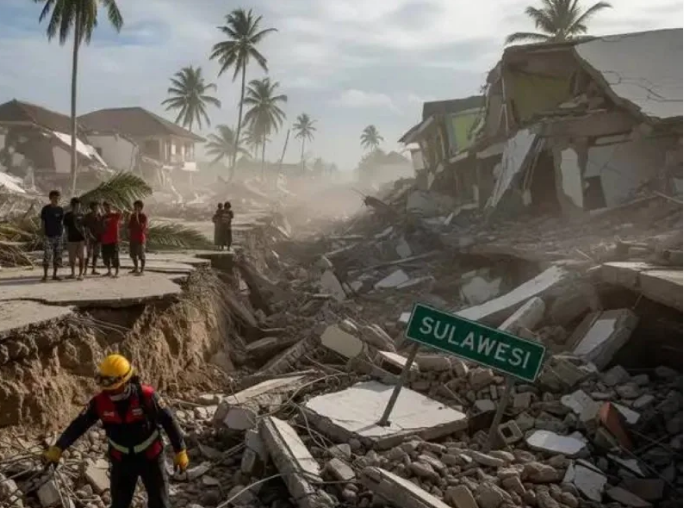
At least 29 people were injured when a powerful earthquake struck Indonesia’s Central Sulawesi province early Sunday, authorities confirmed. Two of the victims remain in critical condition as rescue and medical efforts continue.
The National Disaster Mitigation Agency (BNPB) reported that the 6.0-magnitude quake hit Poso District at 5:38 a.m. local time. The Meteorology, Climatology and Geophysics Agency (BMKG) located the epicenter about 18 kilometers northwest of Poso, at a depth of 10 kilometers.
BNPB chief Suharyanto said 13 of the injured were rushed to Poso Regional Hospital, where two are being treated for life-threatening injuries. Others sustained fractures, head wounds, and minor cuts as they fled homes and buildings during the tremors.
Residents described strong shaking that lasted around 15 seconds, forcing many to run outdoors in panic. “It felt like the ground was rolling beneath us. People shouted and rushed out of their homes,” said one local resident.
Within minutes, a lighter aftershock followed, lasting around seven seconds. BMKG later confirmed that at least 10 aftershocks were recorded in the hours after the main quake, the strongest measuring magnitude 3.2. Officials reassured the public that the quake posed no tsunami threat.
Local disaster teams, police, and medical workers have been deployed to affected areas to assess damage and assist victims. BNPB said emergency tents have been set up near hospitals to accommodate patients as facilities prepare for possible additional casualties.
While no fatalities have been reported, officials are monitoring rural villages near the epicenter, where access is limited and communication lines remain unstable. Damage assessments are ongoing, but early reports suggest some homes and community buildings suffered cracks and minor structural damage.
Indonesia, located on the Pacific “Ring of Fire,” experiences frequent seismic activity due to its position atop multiple tectonic plates. Central Sulawesi is particularly vulnerable, having suffered devastating earthquakes in the past. In 2018, a 7.5-magnitude quake followed by a tsunami struck Palu, also in Central Sulawesi, killing more than 4,000 people.
Authorities urged residents to remain cautious as aftershocks continue. BMKG has advised people living in high-risk areas to avoid damaged buildings and to stay alert for official updates. “The possibility of further aftershocks remains, but there is no tsunami potential from this earthquake,” the agency said in a statement.
As of Sunday evening, medical teams were still treating the injured, and local officials said they would continue monitoring the situation. The government is expected to provide further updates as rescue and assessment efforts progress.