

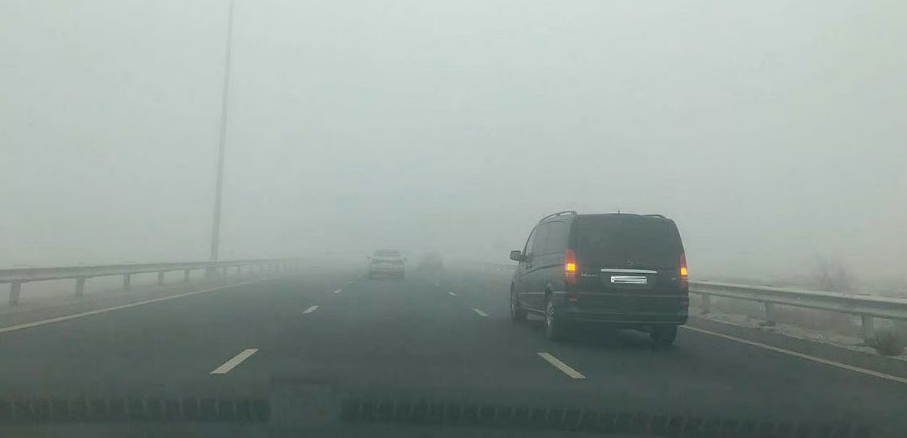
Thick fog blanketed several parts of the UAE on Thursday, sharply reducing visibility and prompting fresh safety warnings from road experts and authorities. In some areas, motorists reported being unable to see beyond a few metres, raising the risk of collisions during peak morning traffic.
As police issued alerts advising drivers to reduce speed and maintain safe distances, auto specialists highlighted a recurring and dangerous habit seen on the roads: motorists driving with their hazard lights on during fog. The practice, they stressed, not only increases the risk of accidents but is also against UAE traffic regulations.
Using hazard lights while driving carries a Dh500 fine and four black points. Automotive technician Syeda Aisha Atif said confusion remains widespread among motorists. “Several people think using their hazards is safer,” she said. “But when you drive with your hazard lights on, you confuse the drivers around you. You won’t be able to indicate when you change lanes, and other drivers won’t be able to see and react on time—this causes accidents.”
Atif said the correct method is clear and widely advised. Drivers should switch on their fog lights, keep low-beam headlights active, maintain consistent speeds, use indicators normally, and stay alert. She added that hazard lights must be reserved strictly for emergencies, such as a breakdown or a stationary vehicle.
Road-safety officials have echoed similar messages for years. Hazard lights conceal turn signals, making it difficult for other drivers to anticipate movements. When visibility is already compromised, misusing lights can prompt sudden reactions from nearby motorists and lead to multi-vehicle crashes.
Fog also affects depth perception and slows reaction times, increasing the need for caution. Experts warn that even small errors can escalate quickly when road markings and vehicles are harder to see.
Authorities also shared guidance for driving in low-visibility or rainy conditions. Motorists are urged to stay fully attentive, avoid distractions, and increase the distance between vehicles. Longer braking distances are advised on wet or slippery surfaces.
Drivers should ensure headlights, fog lights and wipers are functioning properly. Reducing speed helps prevent hydroplaning, while listening to radio traffic updates can provide real-time information on road closures or accidents. Motorists are encouraged to remain considerate of vulnerable road users, including cyclists, motorcyclists and pedestrians.
Safety experts also stressed the importance of staying within lanes, avoiding drifting, and using the right edge of the road as a reference point when visibility drops. If drivers are unable to see clearly, they are advised to pull over safely into a petrol station or rest area until conditions improve.
Authorities said planning journeys ahead of time and leaving earlier can reduce the need to rush during hazardous weather. With the winter season approaching, police urged motorists to remain cautious and follow traffic rules to prevent avoidable accidents on foggy mornings.





