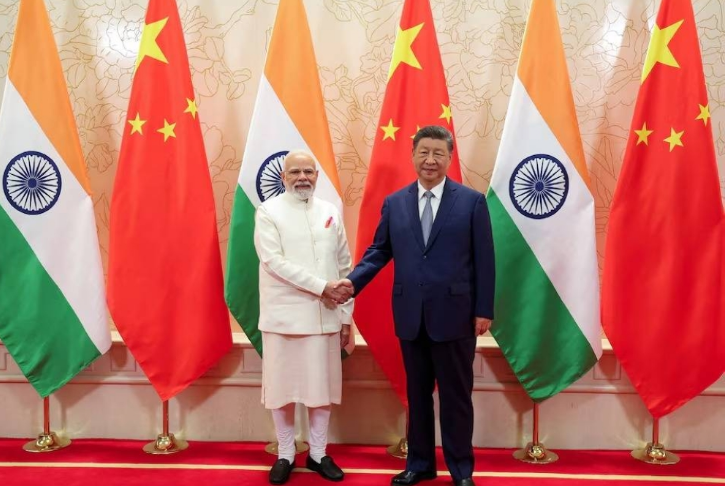
Indian Prime Minister Narendra Modi and Chinese President Xi Jinping struck a conciliatory tone on Wednesday, agreeing that their nations are “development partners, not rivals,” as they discussed trade and security cooperation on the sidelines of the Shanghai Cooperation Organisation (SCO) summit in China.
It was Modi’s first visit to China in seven years, where he joined leaders including Russian President Vladimir Putin, Iran’s President Masoud Pezeshkian, Pakistan’s Prime Minister Shehbaz Sharif, and Central Asian heads of state, in what analysts described as a show of Global South solidarity.
The meeting came just days after U.S. President Donald Trump imposed sweeping tariffs on Indian goods, raising duties to 50% in response to New Delhi’s purchase of discounted Russian oil. The move, which caught Indian officials off guard, has strained Washington’s ties with New Delhi, long seen as a potential counterweight to Beijing in Asia.
During his talks with Xi, Modi called for a reduction in India’s trade deficit with China, which reached nearly $99.2 billion last year, and emphasized the importance of keeping peace along their disputed Himalayan frontier. The two leaders also discussed ways to strengthen economic ties in the face of global trade pressures.
“We are committed to progressing our relations based on mutual respect, trust, and sensitivities,” Modi said, noting that stability along the 3,800-kilometer border was essential for cooperation between the two most populous countries in the world.
Xi, in remarks carried by China’s state news agency Xinhua, said China and India should view each other as “development opportunities rather than threats.” He added, “We must not let the border issue define the overall China-India relationship.”
Relations between the two nuclear-armed neighbors have been fraught since a deadly 2020 clash in Ladakh, in which 20 Indian and four Chinese soldiers were killed. Both sides subsequently deployed tens of thousands of troops and heavy weaponry to the frontier. However, Indian Foreign Secretary Vikram Misri said the situation had “moved toward normalization” after a 2023 agreement on joint patrolling.
Beyond security, the two leaders discussed expanding cooperation in areas such as counterterrorism, regional security, and fair trade. The Indian foreign ministry said they also sought common ground on global challenges through multilateral forums.
Modi confirmed that direct flights between India and China, suspended since the COVID-19 pandemic, will soon resume, while Beijing has agreed to ease export restrictions on rare earths, fertilizers, and industrial equipment. Both sides have also restored reciprocal tourist visa access and permitted religious visits to sites in Tibet.
Chinese Ambassador to India Xu Feihong said earlier this month that Beijing opposed Washington’s tariff escalation and would “firmly stand with India.”
The meeting builds on a tentative thaw that began last year, when Modi and Xi met in Russia and agreed on new border protocols. Analysts say both sides are now keen to stabilize ties as global trade tensions mount and Western alliances remain uncertain.