The United Arab Emirates has emerged as the world leader in artificial intelligence (AI) adoption, with nearly six in ten working-age residents now using AI tools in their professional lives, according to Microsoft’s latest AI Diffusion Report released by its AI for Good Lab.
The study revealed that 59.4 per cent of the UAE’s workforce actively employs AI applications such as generative writing, translation, design automation, predictive analytics and enterprise workflow platforms — the highest rate of AI usage globally. The findings position the UAE ahead of major digital economies including Singapore, Norway, Ireland, South Korea, Denmark, the United States and the United Kingdom.
Globally, AI adoption has surpassed 1.2 billion users in less than three years, making it the fastest-spreading technology in history — outpacing the internet, mobile phones and cloud computing. However, the report noted that the UAE’s leadership stems from years of sustained investment in digital infrastructure, government automation, education, and innovation partnerships between the public and private sectors.
Singapore followed closely in second place with 58.6 per cent adoption, while Norway and Ireland also ranked among the top performers. Yet, the UAE remains the only country where more than 59 per cent of the working population uses AI, establishing it as a global benchmark for scaled, real-world implementation.
The nation’s early commitment to AI laid the foundation for this success. In 2017, the UAE became the first country to appoint a Minister of State for Artificial Intelligence, integrating the technology into government decision-making, education and strategic industries. Since then, national initiatives have expanded AI education, increased high-performance computing capacity, and encouraged widespread workforce training.
Across sectors including finance, aviation, healthcare, logistics, hospitality, construction, media and public administration, tools such as Microsoft Copilot, ChatGPT, Gemini and Midjourney are now integral to daily operations — from drafting reports and analysing data to writing code and managing workflows.
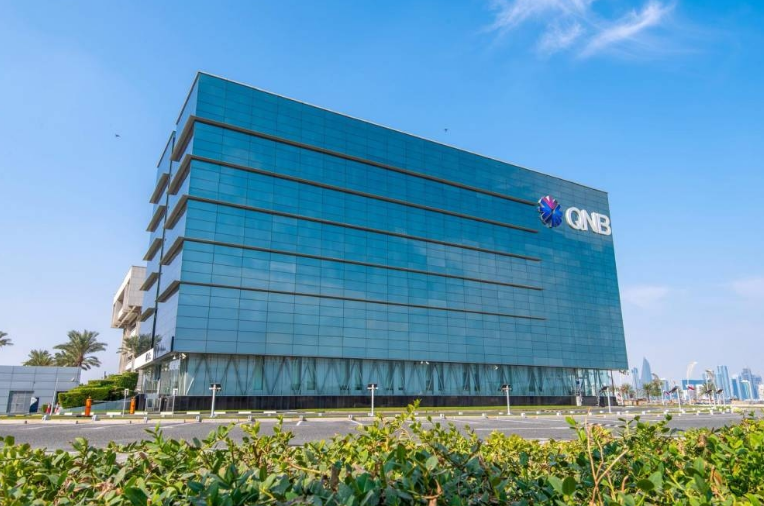
Microsoft’s report also highlighted a sharp contrast between the UAE and other Middle Eastern economies. Qatar recorded 35.7 per cent adoption, Saudi Arabia 23.7 per cent, Kuwait 17.7 per cent and Egypt 12.5 per cent. The report attributed the UAE’s lead to consistent policy alignment and long-term investment rather than short-term trends.
To further close global digital divides, Microsoft has established its first AI for Good Lab in Abu Dhabi. The facility will collaborate with governments, NGOs and research institutions on projects related to climate resilience, agriculture, and public health, while advancing AI models for Arabic dialects and regional languages.
The UAE is also at the forefront of “sovereign AI” — building national infrastructure, models and governance systems within its borders. A recent EnterpriseDB study ranked the UAE and Saudi Arabia highest worldwide in sovereign AI adoption, at 17 per cent, compared to a global average of 13 per cent.
Industry experts say the UAE’s coordinated approach — combining policy foresight, technological infrastructure and talent development — has enabled it to move beyond experimentation to measurable, nationwide impact. As global competition intensifies, the UAE is increasingly seen not just as a leading adopter, but as a key architect of the next generation of AI innovation.