QatarEnergy has unveiled fresh steps to strengthen its position in the global liquefied natural gas (LNG) market, pledging both an expansion of production capacity and a significant investment in cleaner, more efficient shipping technologies.
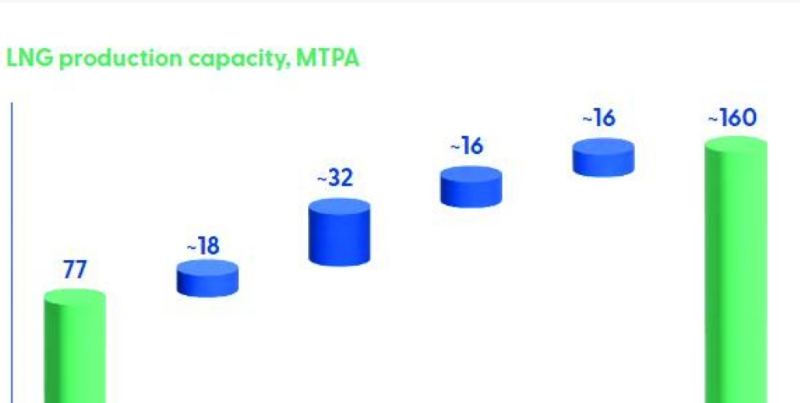
According to its 2024 Sustainability Report, the state-owned energy company aims to boost LNG production to 160 million tonnes per year (MTPY) after 2030, underscoring its long-term strategy to remain a leading supplier of gas worldwide. This target includes the recently announced North Field West Expansion Project, which will build on the country’s already vast reserves.
Central to QatarEnergy’s plan is the addition of 128 new LNG carriers, the largest fleet order in the industry’s history. The vessels, currently under construction at major shipyards, are designed to incorporate the latest technologies to reduce fuel use and emissions.
“These investments highlight QatarEnergy’s dual commitment to meeting the world’s energy needs and advancing sustainability in our operations,” the company said in the report.
The new ships will be fitted with dual-fuel engines capable of running on LNG as well as conventional marine fuels, offering greater flexibility and helping to curb greenhouse gas emissions. LNG burns more cleanly than traditional fuels, lowering carbon dioxide output, while the engines are also engineered to minimise nitrogen oxides (NOx) and sulphur oxides (SOx).
Further efficiency gains will come from advanced hull designs and special underwater coatings aimed at reducing drag and resistance, which will allow vessels to travel more smoothly with lower fuel consumption.
One of the standout innovations is the introduction of air lubrication systems, which generate a layer of bubbles beneath the hull to reduce friction with the water. This technology is expected to improve fuel efficiency and cut emissions further.
“These vessels will not only reduce the operational carbon footprint of our shipping operations but also deliver long-term fuel savings,” the company stated.
QatarEnergy is also pressing ahead with measures at its LNG production facilities. Carbon capture and storage technologies, along with improvements to reduce flaring and overall emissions, are being integrated into both new and existing operations.
Industry analysts say the combination of increased capacity and greener shipping underlines Qatar’s determination to defend its market share while adapting to the global shift toward lower-carbon energy. “This is about future-proofing their LNG leadership while showing responsiveness to climate concerns,” said one Gulf-based energy consultant.
With LNG increasingly seen as a transition fuel in the shift away from coal and oil, QatarEnergy’s moves come at a time when demand is expected to remain strong, particularly in Asia and Europe.