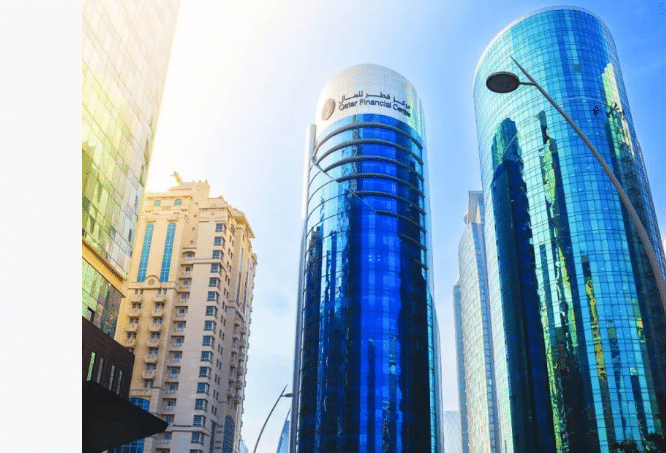
The Qatar Financial Centre (QFC) has announced a major initiative to create a comprehensive ecosystem for tokenised carbon markets, aimed at facilitating the seamless cross-border exchange of carbon credits and advancing global efforts in sustainability and digital finance.
The project, part of the first wave of the QFC Digital Assets Lab innovation challenge, will operate within a controlled lab environment to test the platform’s functionality, efficiency, and potential impact on carbon offset strategies. The lab is powered by the Qatar Central Bank and is central to Qatar’s vision of becoming a global financial and commercial hub by 2030.
“The carbon markets ecosystem will be tested within the lab environment to validate its functionality, efficiency, and potential impact on carbon offset initiatives,” the QFC stated.
The initiative focuses on the tokenisation of carbon credits using distributed ledger technology (DLT), which allows the representation of each carbon credit as a digital token. This approach aims to solve the longstanding challenge of fragmentation in global carbon markets, making it easier to verify, trade, and move carbon credits across borders.
The QFC said that interoperability between DLT protocols will be a key feature, enabling carbon credit tokens issued in different countries to be exchanged with ease. The platform will support the tokenisation, trading, and verification of carbon credits, and help develop global standards for carbon credit quality.
As part of the project, the QFC plans to work with both domestic and international Greentech providers and other industry stakeholders to build an integrated network. This will include a disclosure portal, a registry, and a marketplace or exchange for carbon tokens.
“The QFC aims to collaborate with industry stakeholders to coordinate the advancement of digital utilities and platforms that enable the smooth and reliable flow of ESG [environmental, social, and governance] data,” it said.
The ecosystem will play a crucial role in helping financial institutions and companies allocate capital to sustainable projects, while also tracking progress and measuring impact. The system will ensure transparency and integrity by publicly recording all relevant information about carbon credits on the blockchain, including issuance, certification, and retirement.
The QFC will oversee the regulatory and operational framework of the lab, including setting rules, approving participation, and intervening in cases of non-compliance. Ultimately, the initiative is intended to support the certification of carbon credits, establish clear standards, and offer a transparent registry to track all credit-related activity.
With the global push for carbon neutrality intensifying, the QFC sees tokenised carbon markets as a strategic opportunity to both drive environmental progress and solidify Qatar’s position in the digital finance sector.