A cockpit voice recording from the fatal Air India crash last month suggests one of the pilots may have inadvertently cut off fuel to the engines moments after takeoff, according to a report by The Wall Street Journal citing sources close to the U.S. investigation.
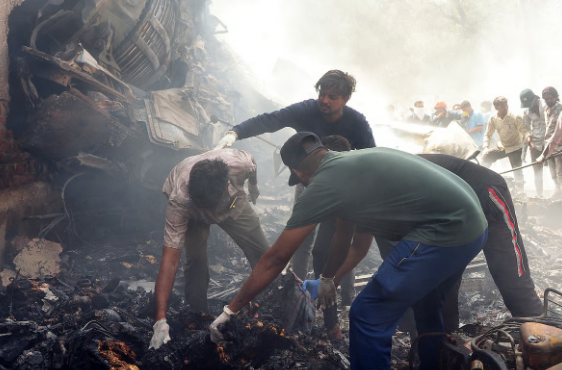
The Boeing 787 Dreamliner, operating a flight from Ahmedabad to London on June 12, crashed shortly after takeoff, killing 260 people, including 19 on the ground. The Aircraft Accident Investigation Bureau (AAIB) of India confirmed in its preliminary report released Saturday that the plane lost thrust seconds after becoming airborne, reaching only 650 feet before descending and crashing into a medical college campus.
According to the Journal, a key exchange between the pilots was captured on the cockpit voice recorder. First Officer Clive Kunder, who was flying the aircraft, reportedly asked Captain Sumeet Sabharwal why the fuel switches had been moved to the “cutoff” position. One of the pilots denied taking the action. The AAIB report confirmed that both engine fuel switches had been moved from “run” to “cutoff” roughly a second apart, but did not specify how or by whom.
The aircraft’s engines lost power immediately after liftoff, triggering deployment of a ram air turbine—a backup power source—visible on CCTV footage. Though the fuel switches were reset to “run” and the engines attempted to restart automatically, the aircraft lacked sufficient altitude and speed to recover.
Aviation safety experts told Reuters that based on the available information, the loss of thrust strongly suggests manual interference with the fuel system. “There is no other rational explanation consistent with the evidence,” said John Nance, a former pilot and aviation analyst. However, he added that investigators would need to rule out all other possibilities before drawing final conclusions.
In a memo to staff, Air India CEO Campbell Wilson said the aircraft had no mechanical or maintenance issues at the time of the crash. Boeing and GE, the engine manufacturer, were not issued any safety recommendations in the preliminary report. The U.S. Federal Aviation Administration and Boeing subsequently reaffirmed the safety of the aircraft’s fuel switch mechanisms.
The crash has reignited debate over whether cockpit video recorders should be mandated on commercial aircraft. “Video could have answered this question immediately,” said Nance.
Air India is also facing scrutiny over its broader safety practices. Earlier this month, the European Union Aviation Safety Agency said it would launch a probe into Air India Express, the airline’s low-cost arm, after reports emerged of falsified maintenance records involving an Airbus A320.
A final report on the June 12 crash is expected within a year, as per international aviation protocols.