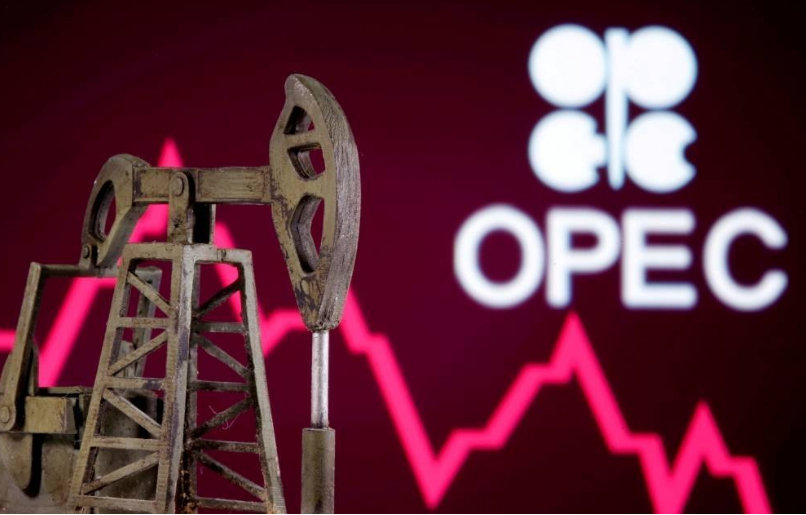
Oil prices fell for a third straight session on Friday as traders awaited the outcome of a key OPEC+ meeting scheduled for Sunday, where members will consider advancing production increases.
In early trading, Brent crude futures dipped 23 cents, or 0.3%, to $66.77 per barrel. U.S. West Texas Intermediate (WTI) crude also slid 19 cents, or 0.3%, to $63.29. The declines extend a week-long downturn in crude markets, driven by concerns over oversupply and mixed signals on global demand.
The OPEC+ alliance, which produces nearly half of the world’s oil, is expected to debate whether to begin unwinding another round of production cuts as early as October. The plan under discussion involves increasing output to offset a second tranche of previously agreed reductions totaling about 1.65 million barrels per day—roughly 1.6% of global demand. That would bring additional barrels to market more than a year earlier than originally planned.
The decision comes at a delicate time for energy markets. Oil prices have already eased from recent highs as concerns grow about slowing demand in major economies, while U.S. crude stocks have unexpectedly risen. The U.S. Energy Information Administration (EIA) reported this week that domestic inventories swelled by 2.4 million barrels, surprising analysts who had predicted a draw of around 2 million.
The build in stocks reflects refinery maintenance season in the U.S., which typically curtails crude demand. Data from the American Petroleum Institute (API) earlier pointed to a smaller increase of about 600,000 barrels, but the larger-than-expected EIA figures reinforced downward pressure on prices.
Market watchers say OPEC+ will need to carefully balance production increases with global demand trends to avoid undermining prices. “The timing of this decision is critical,” said one commodities analyst in London. “If OPEC+ moves too aggressively, the risk is that the market will tip back into oversupply just as inventories are already climbing.”
At the same time, some OPEC+ members are eager to raise output earlier to capitalize on revenues and reclaim market share from non-member producers. Sunday’s meeting is expected to expose divisions within the group, as producers weigh their own fiscal needs against collective market stability.
Investors will be watching closely for the outcome, as any shift in OPEC+ policy could set the tone for oil markets heading into the final quarter of the year. For now, crude prices remain under pressure, with traders cautious ahead of what could be a pivotal decision for global energy supply.