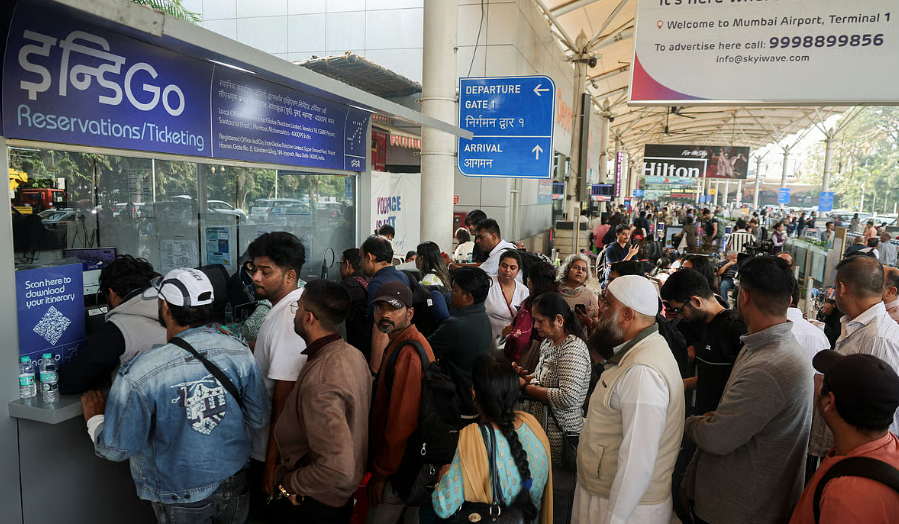
India imposed caps on domestic airfares on Saturday after IndiGo’s mass flight cancellations led to a steep surge in ticket prices across competing airlines. The move came amid growing concerns that passengers, forced to book last-minute alternatives, were being charged exorbitant sums on major routes.
The Ministry of Civil Aviation said the decision was aimed at preventing “opportunistic pricing” as IndiGo continued to cancel hundreds of flights for a fifth consecutive day. The government did not disclose the exact fare ceilings but confirmed that all airlines had been instructed to strictly follow the new limits.
“In order to protect passengers… an official directive has been issued mandating adherence to the fare caps now prescribed,” the ministry said. Officials added that fare levels would be tracked through real-time data and coordinated oversight to ensure compliance until operations stabilise.
The impact of IndiGo’s ongoing disruptions quickly spilled over into the wider aviation market. On Saturday morning, booking platforms showed domestic airfares at levels many passengers described as unprecedented. According to listings on MakeMyTrip, SpiceJet economy seats from Delhi to Bengaluru ranged from ₹63,000 to ₹84,000 — prices several times higher than usual. One-stop Air India flights from Delhi to Hyderabad were selling for about ₹62,000, nearly ten times a normal weekday fare.
Routes such as Delhi–Chennai were showing prices between ₹62,000 and ₹82,000, while Delhi–Guwahati seats ranged from ₹23,998 to ₹35,015, ANI reported.
The surge sparked widespread outrage. Singer Rahul Vaidya said he paid ₹420,000 for last-minute Air India tickets for a group travelling from Goa to Mumbai. Actress Nia Sharma shared that she was charged ₹54,000 for a domestic ticket. Actor Sonu Sood criticised airlines for “profiteering” during a crisis, calling for permanent fare caps. Former cricketer Harbhajan Singh also urged authorities to act decisively to ensure fair pricing.
Air India and Air India Express responded shortly after the government’s announcement, stating that they had already “proactively capped” economy fares on non-stop domestic flights since December 4. They attributed the high prices circulating online to multi-stop itineraries or combinations involving premium cabins, which are not fully controllable on external booking platforms. Both airlines said they were working to increase capacity to help stranded travellers.
India’s aviation sector has been under intense pressure all week as IndiGo, the country’s largest carrier, grappled with thousands of cancellations linked to stricter pilot duty and rest rules. The government has since provided temporary exemptions and authorised additional train services to ease the backlog. IndiGo said it expects operations to normalise between December 10 and 15.
Despite signs of gradual recovery, cancellations continued on Saturday. Airport officials told Reuters that IndiGo grounded 124 flights in Bengaluru, 109 in Mumbai, 86 in Delhi and 66 in Hyderabad. Other major carriers, including Air India and Akasa, have not faced similar operational setbacks under the revised rules.
With the holiday travel season approaching, authorities have indicated that fare caps will remain in force until nationwide air travel returns to stability.