India has officially emerged as the world’s fourth-largest economy, surpassing Japan with a GDP that now exceeds $4 trillion, according to an announcement made by NITI Aayog CEO B.V.R. Subrahmanyam. The milestone was revealed after the 10th Governing Council meeting of NITI Aayog, marking a significant moment in the country’s economic ascent.
Subrahmanyam emphasized that India is on a clear path to becoming the third-largest economy within the next two to three years, behind only the United States, China, and Germany. “The geopolitical and economic environment is favourable to India,” he said, highlighting the country’s growing global clout.
India’s economic performance continues to defy global trends, driven by robust private consumption, structural reforms, and strategic policy initiatives. The International Monetary Fund (IMF) projects India’s GDP to grow by 6.2% in FY25 and 6.3% in FY26, well above global averages of 2.8% and 3.0%, respectively. The IMF’s latest World Economic Outlook pegs India’s nominal GDP at $4.187 trillion by FY26, edging out Japan’s $4.186 trillion forecast.
Key to this growth is India’s dynamic private sector and resilient domestic demand. According to the Union Bank of India (UBI), GDP growth for Q4 FY25 is projected at 7.0%, up from 6.2% in the previous quarter. Gross Value Added (GVA) is also expected to rise to 6.7%. Private sector activity, excluding agriculture and government spending, is set to accelerate to 6.8%.
The Reserve Bank of India’s latest bulletin echoes these findings, noting a steady improvement in economic momentum during the second half of FY25.
Looking ahead, IMF Executive Director Krishnamurthy V. Subramanian suggested India could become a $55 trillion economy by 2047 if it maintains an 8% annual growth rate. Achieving this, he said, would require cohesive policy efforts across state and central governments.
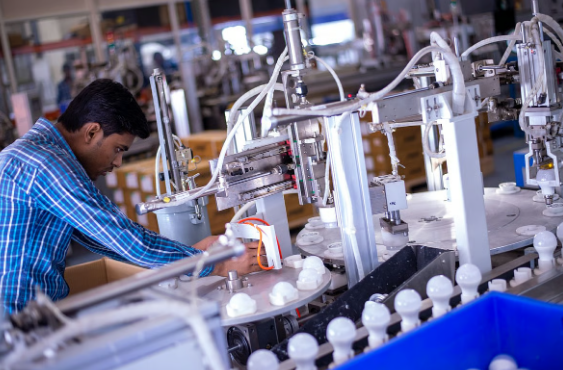
India’s competitive manufacturing sector and expanding digital economy also support its growth ambitions. Despite global uncertainties, including tariff tensions, Subrahmanyam maintained that India remains an attractive hub for global manufacturers. The country’s digital payments system—led by the Unified Payments Interface (UPI)—processed over 131 billion transactions in FY24, reinforcing India’s global leadership in fintech.
With a young, skilled workforce and infrastructure investments underway, India’s rise is reshaping global economic narratives. As developed economies face stagnation, India’s momentum positions it not only to catch up—but to lead.