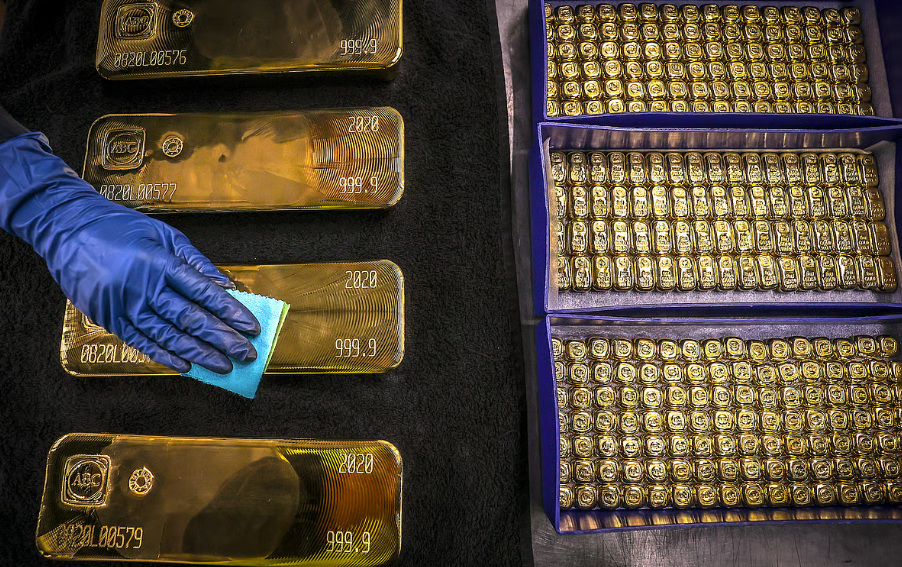
Gold broke above the $4,500-an-ounce mark on Wednesday, lifted by expectations of looser U.S. monetary policy and persistent geopolitical tensions. The precious metal, a traditional safe haven during periods of economic and political uncertainty, reached a record high of $4,525.19 earlier in the session, marking its largest annual increase since 1979.
The rally, which has pushed gold prices up more than 70% this year, has been driven by a combination of safe-haven demand, bets on U.S. rate cuts, strong central-bank purchases, de-dollarisation trends, and rising inflows into exchange-traded funds (ETFs).
Large buyers and institutional investors typically acquire gold through banks, while spot market prices are determined by real-time supply and demand. London remains the most influential hub for gold trading, with the London Bullion Market Association setting standards and providing a framework for over-the-counter trades among banks and dealers. China, India, the Middle East, and the United States also play significant roles in the global gold market.
Gold exposure is available through futures contracts on exchanges such as COMEX, part of the New York Mercantile Exchange, the Shanghai Futures Exchange, and the Tokyo Commodity Exchange (TOCOM). Investors can also access gold via ETFs, which issue securities backed by physical metal. Inflows into physically backed gold ETFs reached $64 billion year-to-date as of October, including a record $17.3 billion added in September, according to the World Gold Council.
Retail consumers continue to invest in gold through bars and coins, either from dealers in stores or online. Both methods offer physical ownership of the metal.
Gold prices are influenced by several key factors. Investor interest and market sentiment play a central role, with speculative buying or selling often responding to news and global events. Foreign exchange rates also impact gold, as it generally moves inversely to the U.S. dollar. A weaker dollar makes gold cheaper for holders of other currencies, encouraging demand.
Monetary policy and political tensions further drive the market. Lower interest rates reduce the opportunity cost of holding non-yielding assets like gold, while global trade disputes and other geopolitical uncertainties boost demand for safe-haven assets. Central banks have maintained strong buying, adding to reserves despite high prices.
Global gold demand rose 3% year-on-year to 1,313 metric tons in the third quarter of 2025, the highest quarterly total on record, driven largely by investment demand. China continued its steady accumulation, raising reserves to 74.12 million fine troy ounces by the end of November, marking its 13th consecutive month of additions.
With ongoing economic uncertainties and central-bank policies keeping investors cautious, gold is likely to remain a preferred asset for those seeking stability and protection against market volatility.