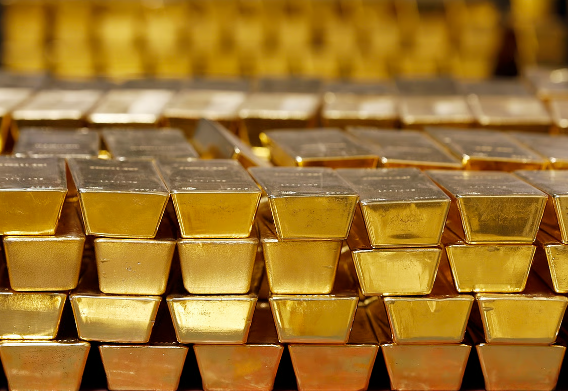
Gold prices are holding near $3,400 per troy ounce, slipping slightly from recent highs above $3,410, as US tariffs on certain gold imports continue to influence trading patterns. Analysts say the move — targeting one-kilo and 100-ounce gold bars — is helping support prices despite the retreat.
Overnight trading saw gold futures on New York’s Comex exchange surge against the London spot rate after the Financial Times reported that Washington would begin taxing imports of the smaller-format bars. The decision is another blow to Switzerland, which dominates global gold refining and often converts London’s standard 400-ounce bars into the kilo-sized units widely used in US markets.
“One-kilo bars are the standard for Comex vaults and an essential link in global gold trading,” said Ole Hansen, Head of Commodity Strategy at Saxo Bank. “The US futures market provides critical liquidity for bullion banks worldwide. That’s why the exchange-for-physical spread has widened sharply — hedging-related short positions are being unwound.” Hansen noted that similar disruptions were seen during the Covid-19 pandemic and earlier this year amid speculation over potential tariffs on precious metals.
Hansen warned the current short-covering rally could be temporary. “Once that subsides, the premium over London may return to more normal levels — unless we get another ‘TACO moment,’” he said, referring to a past market dislocation linked to transatlantic bullion flows.
The December Comex contract, the most actively traded, hit a record $3,534 overnight. The premium over London widened beyond $100, compared with around $40 a week ago. Analysts caution that these distortions mean the London spot price remains the clearest measure of gold’s true value. “Until we see a breakout above $3,450, spot gold is effectively range-bound,” Hansen added.
The turbulence mirrors recent events in the New York copper market. Earlier this month, high-grade copper prices spiked to a record $5.8955 per pound following former President Donald Trump’s surprise proposal to double tariffs on copper imports to 50 per cent. The move pushed New York copper’s premium over London to an unprecedented 34 per cent, prompting a rush to ship supplies into the US.
However, that trade quickly reversed when Trump announced refined copper traded on futures exchanges would be exempt from tariffs until at least January 2027. The premium collapsed almost overnight, leaving US warehouses at their highest copper inventory levels in 21 years. With imports now slowing, analysts expect domestic copper prices to fall below global benchmarks to clear the glut.
The latest developments have renewed questions over the Comex exchange’s reliability for transparent price discovery, with some market participants warning that political interventions are increasingly shaping US metals trading.