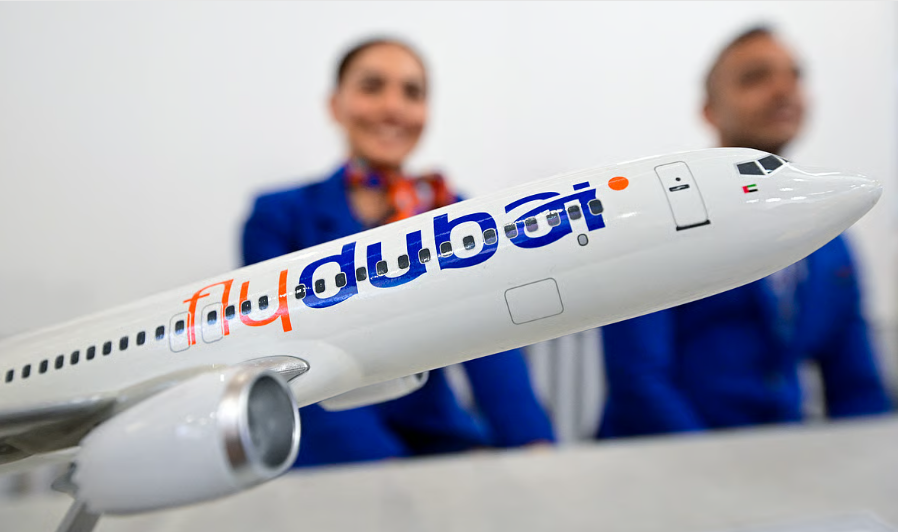
Low-cost carriers in the Middle East and Asia continue to face structural challenges that their counterparts in Europe and the United States do not encounter, flydubai chief executive Ghaith Al Ghaith said during a recent media briefing. He noted that fragmented aviation rules and cross-border limitations make it difficult for budget airlines in the region to scale operations or compete under the same conditions seen in Western markets.
Al Ghaith highlighted that in Europe and the US, airlines operate within unified aviation frameworks, allowing carriers to establish bases freely across member states and run flights across borders without major regulatory hurdles. “It is one market to operate in,” he said, contrasting that environment with the Middle East and large parts of Asia, where carriers must navigate individual national restrictions. “Here, we have borders and we have restrictions on flying. You cannot fly anywhere.”
He pointed to India as a striking example. Despite the UAE hosting one of the largest Indian expatriate populations globally, flydubai operates only 1.5% of its total capacity to India. He attributed this to New Delhi’s long-standing refusal to increase seat allocations for UAE-based airlines — a policy in place for more than a decade. The restrictions, he said, limit opportunities for airlines and passengers alike, even though higher flight frequencies would help meet demand from Indian travellers and support job creation for Indian nationals across the aviation sector.
Al Ghaith said the varied demographics and market characteristics in the region also complicate the traditional low-cost model. “We have different customers from different countries,” he remarked, arguing that this diversity places additional operational pressures on budget carriers, making it difficult for such models to thrive in the same way they do in Europe and the US.
Flydubai, launched in 2009 as a budget airline, has been steadily repositioning itself. The carrier introduced Business Class and, according to its chief executive, has seen strong results from the upgrade. The airline is preparing to introduce Premium Economy on its upcoming Boeing wide-body aircraft, which are expected to enter service in the coming years. “We’ve introduced Business Class and we can see the success that this brings for us,” Al Ghaith said.
The challenges facing low-cost operators in the region were highlighted earlier this year when Wizz Air Abu Dhabi suspended its operations and exited its joint venture. The carrier cited geopolitical tensions, regulatory obstacles and intense competition as key reasons for the withdrawal.
The flydubai chief’s comments reflect broader industry concerns that fragmented regional aviation policies continue to constrain the growth of low-cost travel across the Middle East and Asia, despite rising passenger demand and expanding regional economies.