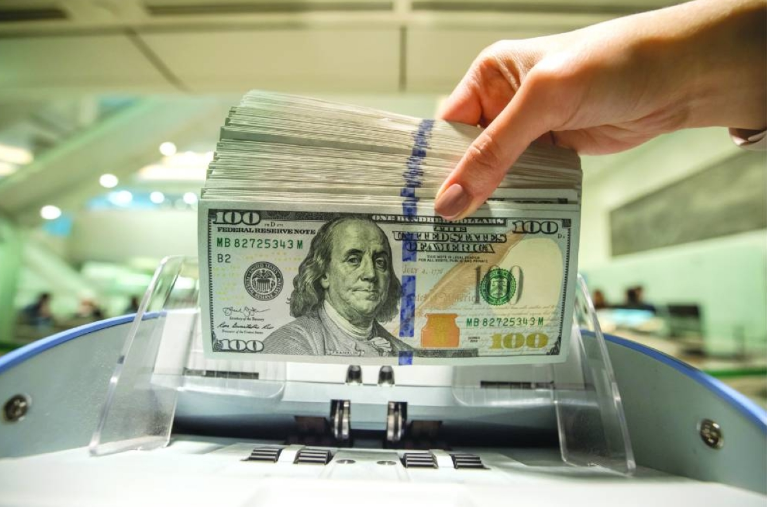
The US dollar recorded its strongest weekly performance in more than a year as investors sought safety in the currency amid escalating conflict in the Middle East and a sharp surge in global oil prices.
The Bloomberg Dollar Spot Index rose 1.3 per cent during the week, marking its best performance since November 2024. The rally followed intensifying hostilities in the region after the United States and Israel launched strikes against Iran over the weekend, prompting retaliatory attacks by Tehran across several parts of the Middle East.
The conflict has pushed energy markets into turmoil. Brent crude oil futures have climbed by nearly 30 per cent since the strikes began, driven by concerns about disruptions to oil production and shipping routes. Rising energy prices have raised fears of renewed inflation pressures for major economies.
Those concerns have influenced expectations about monetary policy in the United States. Traders have scaled back predictions that the Federal Reserve will cut interest rates in the near future, which has also supported the dollar’s rise in global currency markets.
At the same time, new economic data painted a mixed picture of the US labour market. A report released Friday showed that American employers unexpectedly reduced hiring last month. According to figures from the Bureau of Labor Statistics, non-farm payrolls fell by 92,000 after strong job growth earlier in the year. The decline partly reflected reduced employment in the healthcare sector due to strike activity.
Despite the weaker data, currency markets paid limited attention to the report. The dollar ended the day little changed, while benchmark 10-year US Treasury yields also remained largely steady.
Market analysts say geopolitical uncertainty and rising oil prices are currently dominating investor sentiment. Alex Cohen, a foreign-exchange strategist at Bank of America Corp, said traders are overlooking weaker economic indicators in the current environment.
“The market is looking through soft data in this environment, as ongoing uncertainty and fresh highs in oil are the overwhelmingly predominant drivers,” Cohen said.
The dollar has strengthened against most major currencies during the week. The euro lost more than 1.5 per cent against the US currency, reflecting Europe’s exposure to higher energy costs. The Canadian dollar, supported by Canada’s role as a major energy exporter, has shown greater resilience.
Brendan Fagan, a macro strategist with Markets Live, said the latest market movements highlight the enduring role of the US currency during times of global stress.
“The dollar is once again demonstrating that in moments of stress, all the talk of dollar diversification and other structural overhangs takes a back seat to liquidity, yield and its unrivaled role at the centre of the global financial system,” he said.
Currency strategists at JPMorgan Chase & Co also shifted their outlook on the dollar. After holding a negative view for nearly a year, the bank has moved to a neutral stance as the conflict and energy shock reshape global markets.
Data from the Commodity Futures Trading Commission showed speculative traders reducing their bets against the dollar. Short positions have fallen to about $12.3 billion, down from $18.9 billion in the previous reporting period, indicating a rapid shift in market sentiment.