After nearly two years of sharp gains, global cocoa prices have fallen significantly in 2025, easing from record levels seen late last year. Yet consumers heading into the festive season are still paying more for chocolate, highlighting a disconnect between raw material costs and retail prices.
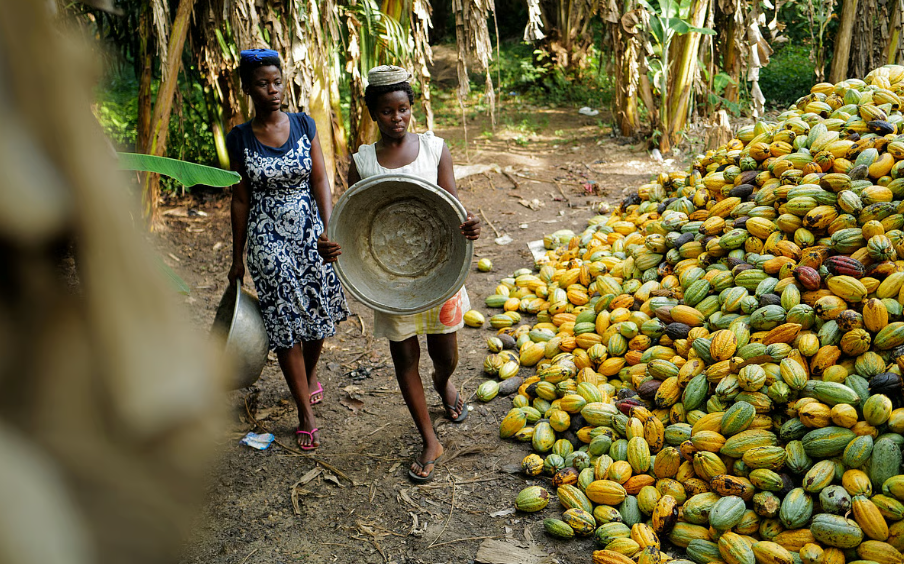
Cocoa production remains heavily centred in West Africa, where Ivory Coast and Ghana together supply more than half of the world’s cocoa beans. Additional output comes from countries including Brazil, Cameroon, Ecuador, Indonesia and Nigeria. This concentration leaves the global market exposed to weather disruptions, plant disease and farming conditions in a limited geographic area. Cocoa is grown largely by millions of small-scale farmers, making supply sensitive to both climate and income pressures.
Between 2021 and 2024, cocoa harvests repeatedly fell short of demand, driving prices sharply higher. Analysts point to ageing cocoa trees, outbreaks of swollen shoot virus and black pod disease in Ghana and Ivory Coast, along with limited use of fertilisers and pesticides due to farmers’ financial constraints. As a result, cocoa futures in New York surged to about $12,000 per tonne in December 2024, far above the $1,000 to $4,000 range that had prevailed for decades.
Improved conditions in West Africa have since boosted output. Farmgate cocoa prices in Ghana and Ivory Coast, which are set by governments, rose this year after remaining stagnant for a long period. Farmers say higher earnings have allowed them to invest in fertiliser, machinery and new plantings, helping yields recover. Favourable rainfall has also supported production. As supplies improved, cocoa prices eased to around $6,000 per tonne, roughly half their level a year earlier.
Despite the drop, chocolate prices have not followed suit. Manufacturers had already locked in high-cost cocoa for products made months ago. Faced with elevated input costs, many companies responded by raising prices, reducing product sizes or cutting cocoa content. In the UK, snack maker McVitie’s recently said its Penguin and Club bars no longer meet the definition of chocolate after changes to their recipes.
Major confectionery groups including Ferrero, Mars, Mondelez and Nestlé have reported softer demand after increasing prices. Analysts say the recent decline in cocoa prices came too late to affect Christmas ranges, which were planned and priced well in advance.
Nestlé said recent price movements are encouraging but warned that cocoa markets remain volatile, making it premature to assess the impact on retail pricing. Industry watchers suggest there could be some relief for consumers buying Easter chocolate, provided prices remain stable in the months ahead.
For now, shoppers face higher costs, even as cocoa farmers and markets adjust to a shifting supply landscape.