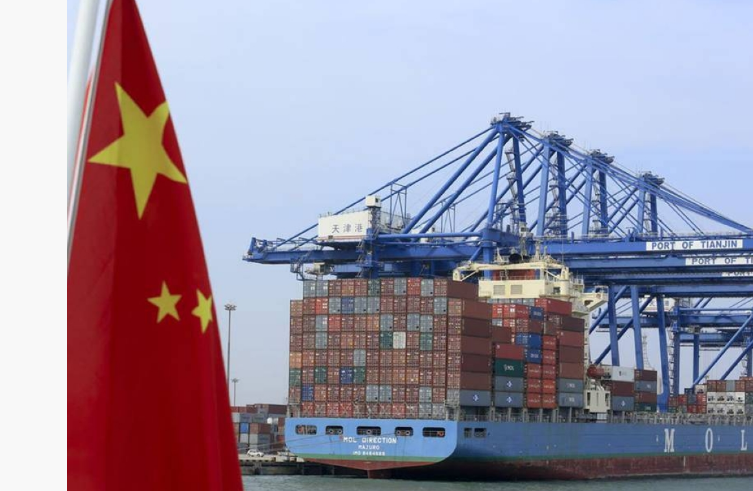
China’s total goods trade rose 4% year-on-year in the first nine months of 2025, reaching 33.61 trillion yuan (about $4.73 trillion), according to data released Monday by the General Administration of Customs (GAC). The figure marks an acceleration from the 3.5% growth recorded in the January–August period, signaling renewed momentum in the world’s second-largest economy.
Exports continued to drive overall growth, rising 7.1% to 19.95 trillion yuan, while imports dipped slightly by 0.2% to 13.66 trillion yuan, state media outlet Xinhua News Agency reported. The widening gap between exports and imports reflects both strong global demand for Chinese goods and continued weakness in domestic consumption.
Trade performance in September was particularly robust. Monthly goods imports and exports totaled 4.04 trillion yuan, up 8% from a year earlier — the fastest monthly growth rate so far this year. Analysts said the surge suggests a rebound in foreign trade activity ahead of the year-end holiday season and renewed orders from key trading partners.
The GAC also highlighted China’s deepening trade ties with countries participating in the Belt and Road Initiative (BRI). From January to September, total trade with these partner nations rose 6.2% year-on-year to 17.37 trillion yuan.
Trade with several key regions showed strong gains. Commerce with the Association of Southeast Asian Nations (ASEAN) — China’s largest trading partner — expanded 9.6%, while trade with Africa and Central Asia surged 19.5% and 16.7%, respectively. Trade with Latin America also grew by 3.9%, and with other Asia-Pacific Economic Cooperation (APEC) economies by 2%.
Economists said the latest figures underscore China’s ongoing pivot toward emerging markets as trade tensions and sluggish demand in developed economies continue to weigh on traditional export destinations. “The Belt and Road countries have become a stabilizing factor for China’s foreign trade this year,” said a Beijing-based trade analyst.
Despite the overall positive trend, challenges remain. Weak import growth suggests that domestic demand has yet to recover fully amid a property sector slowdown and cautious consumer spending. Analysts also warn that global uncertainties, including geopolitical risks and fluctuating commodity prices, could temper trade performance in the coming months.
Still, the Customs Administration said the stronger-than-expected third-quarter data demonstrated “resilience and stability” in China’s trade sector and reinforced confidence in meeting annual economic growth targets.