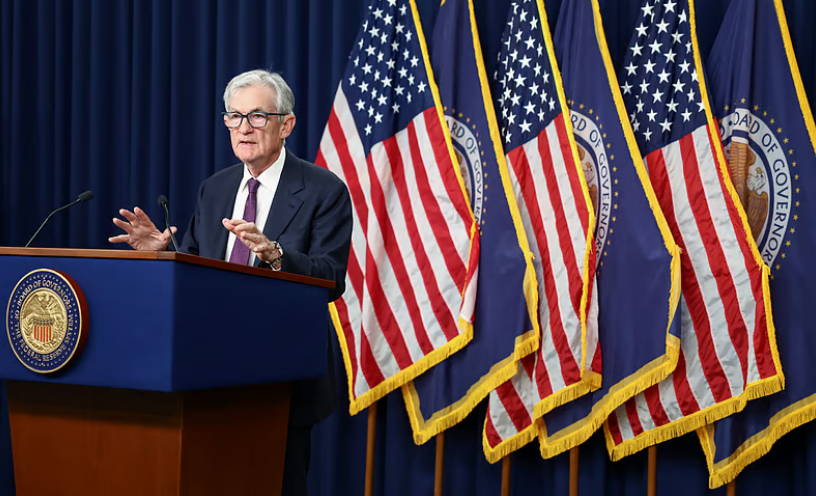
Major central banks adopted a cautious but firm stance this week as rising energy prices linked to the Iran war increased inflation concerns while clouding the global economic outlook. Policymakers signalled they remain alert to price pressures but are wary of tightening policy too aggressively amid ongoing uncertainty.
In a rare alignment, central banks from the Group of Seven economies, including the Federal Reserve, Bank of Japan, Bank of Canada, Bank of England and European Central Bank, all held policy meetings in the same week. Their decisions reflected a shared concern about inflation returning due to higher oil and gas prices, even as economic growth remains uneven.
The Federal Reserve and Bank of Canada both kept interest rates unchanged on Wednesday, followed by a similar move from the Bank of Japan on Thursday. Despite holding rates, officials made clear they are closely monitoring the impact of energy markets on inflation.
Jerome Powell said higher energy costs are likely to push inflation up in the near term but warned that the overall economic impact remains uncertain. His comments, combined with a reluctance to prioritise labour market risks over inflation, led markets to push expectations for rate cuts further into the future.
In Japan, Kazuo Ueda indicated that a rate increase could still be considered if the economic impact of higher oil prices proves temporary. He noted that companies are already raising wages and prices, increasing the likelihood that higher costs could be passed on to consumers more quickly than in previous shocks.
Tiff Macklem struck a similar tone, warning that policymakers would act to prevent energy-driven price rises from becoming embedded in broader inflation.
Elsewhere, central banks also adjusted their approach in response to the shifting outlook. The Reserve Bank of Australia raised interest rates to a 10-month high, citing a “material” inflation risk from surging oil prices. Brazil’s central bank opted for a smaller-than-expected rate cut, signalling caution despite already high borrowing costs. Meanwhile, the Swiss National Bank and Sweden’s Riksbank kept rates steady, highlighting the uncertainty surrounding the conflict’s economic impact.
Attention now turns to decisions from the Bank of England and the European Central Bank, where rates are expected to remain unchanged, but guidance on future policy will be closely scrutinised.
Financial markets have reacted nervously, with stocks falling and oil prices climbing following recent escalations in the conflict. Analysts warn that the situation could increase the risk of stagflation, where slow growth coincides with rising prices.
Charu Chanana of Saxo said the conflict is now affecting the foundations of the global energy system rather than remaining a purely geopolitical issue. As a result, central banks face a difficult balancing act between controlling inflation and supporting growth, with no clear resolution in sight as the conflict continues to unfold.